Liability Limits for Property Left in a Room
An innkeeper was once close to an insurer of everything a guest brought inside. Statutes replaced that with dollar caps, and those caps are conditional on steps the establishment has to take before anything ever goes missing.
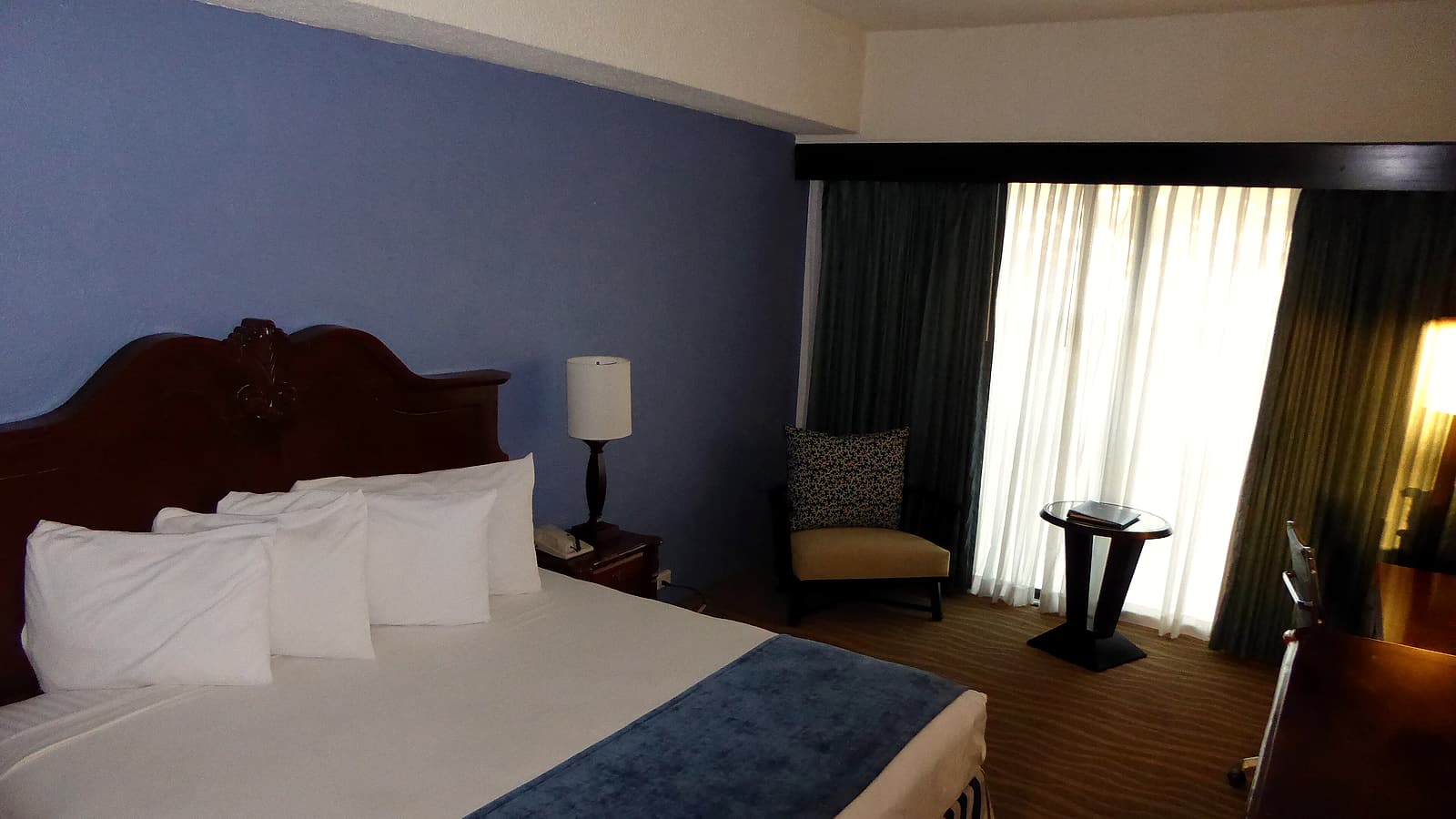
The rule in short
Every state has replaced the common law innkeeper's near-strict liability for guest property with a statutory cap. The cap typically applies only where the establishment provided a safe or safekeeping facility and posted the statutory notice where guests can see it. Amounts are low and are often split into per-item and aggregate limits. Property accepted for safekeeping usually attracts a separate, higher limit and a receipt requirement. Negligence and refusal of deposit can defeat the cap.
The innkeeper's duty toward a guest's belongings was once one of the strictest obligations in the common law. A guest who lost property at an inn recovered from the innkeeper without proving fault, on the reasoning that travelers slept among strangers in a house they did not control. Statutes in every state have since replaced that rule with dollar caps, and the caps are conditional. They are earned by steps the establishment takes before anything goes missing.
From near-insurer to limited bailee
The modern statutes convert the innkeeper's position into something closer to that of a paid bailee, then attach ceilings. A common formulation makes the operator liable as a depositary for hire but provides that liability shall not exceed a stated aggregate figure, with separate lower figures for each trunk, each valise or bag, each box or package, and all other personal property. The amounts were set long ago in most states and have not been revisited.
Other statutes take a different structure: a limit for valuables accepted for safekeeping at the desk, and a separate, lower limit for everything else, with a mechanism for raising the second figure if the guest files a written inventory and the operator inspects the items. Both structures produce the same practical result. The recoverable amount for a serious loss is a small fraction of what the property was worth.
The conditions attached to the cap
Three conditions recur. The establishment must maintain a safe or vault suitable for the deposit of valuables. It must offer to receive valuables for deposit. And it must post the statutory notice in the manner the statute prescribes, which usually means a conspicuous location in the guest room, at the registration area, or both, in type of a stated size.
Courts construe these conditions strictly because they are the consideration for the limitation. A notice in a directory inside a drawer, a notice too small to read, or a safe that the establishment quietly stopped offering will each be argued to defeat the cap. Establishments that treat the posting as decoration frequently discover its importance only in the one case where the loss is large.
| Category of property | Typical treatment | What the establishment must have done | What defeats the limit |
|---|---|---|---|
| Money, securities, jewelry and precious stones | A distinct safekeeping limit | Accepted the deposit and issued a receipt stating value | Refusing a deposit the statute required it to accept |
| Wearing apparel and ordinary goods in the room | A lower general cap | Maintained a safe, offered deposit, posted the notice | Missing or non-conforming posting |
| Property listed on a written inventory | A raised cap in some states | Received the inventory and inspected the items | Failure to inspect where the statute requires it |
| Property lost through the establishment's own fault | Statutes vary; several preserve full liability | Nothing available | Proven negligence by the operator or its staff |
| Property of a person who is not a registered guest | Often outside the statute entirely | Not applicable | Ordinary bailment or negligence law applies instead |
Whether negligence breaks the ceiling
This is the contested question in most litigation, and states differ. Some statutes cap liability regardless of fault, on the reasoning that a fault exception would swallow the limitation. Others preserve full liability where the loss resulted from the establishment's own negligence or that of its employees, and several confine the cap to losses not caused by the operator's fault at all. A guest whose room was opened by a staff member and emptied is in a different position under the second reading than under the first.
Related to that, statutes generally require the establishment to accept valuables offered for deposit. An operator that refuses the deposit and then loses the property has usually lost the protection of the cap, because the guest did everything the statute asked. The same logic runs the other way: a guest who was told about the safe, declined it, and left a valuable item in a drawer will find the cap firmly in place.
Where valuables are deposited, statutes commonly require a written receipt stating the value, on a form that recites the liability limits in type large enough to be noticed. That receipt is the entire proof of what was handed over and what it was worth. A guest who deposits items without one, or who accepts a receipt that leaves the value blank, has converted a documented claim into a swearing contest. Filling in the value at the counter takes a minute and is the whole of the protection available.
Vehicles, parcels and property left behind
A further category catches out business travelers. Property shipped to a property in advance of arrival, or held at a desk after a conference, is not always in the hands of the establishment as an innkeeper at all, because the sender may not yet be a registered guest. Establishments that accept parcels usually do so under a separate written policy with its own disclaimers, and the recoverable amount in a dispute over a missing shipment is likely to be governed by that policy and by the carrier's terms rather than by the lodging statute.
Vehicles and their contents usually fall outside the innkeeper liability statutes and are governed by ordinary bailment principles instead. The distinction turns on control: a self-park lot where the guest keeps the keys is generally not a bailment at all, while valet parking, in which the establishment takes the keys and the vehicle, generally is, with a duty of reasonable care attached. Disclaimers printed on a claim ticket limit but do not always eliminate that duty.
Property left behind after departure is a third category. Establishments typically hold it for a stated period, log it, and dispose of it under a written policy. Where the guest also owes money, the operator may assert a statutory lien over belongings, a power with its own notice and sale requirements described in the innkeeper's lien on a guest's belongings. Holding property against a debt without following that procedure is conversion.
What each side can do in advance
For a guest, the practical measures are narrow but effective: deposit genuinely valuable items at the desk and obtain a receipt stating the value, keep irreplaceable documents and medication out of checked or stored luggage, and understand that travel or homeowner insurance is generally the real source of recovery rather than the statute. Reading the posted notice takes seconds and identifies the actual ceiling.
For an establishment, the measures are maintaining the safe, training staff to offer it, posting the notice exactly as the statute directs, and documenting deposits. Those steps also intersect with the security obligations discussed in guest safety claims and foreseeability, since a loss involving a door lock or a key control failure is likely to be pleaded as negligence precisely in order to escape the cap. Where the occupant has ceased to be a transient guest, the statutes may not apply at all, a boundary examined in when a long stay turns a guest into a tenant.
Points to carry away
- The old rule made an innkeeper liable for guest property almost regardless of fault.
- Statutory caps replaced that rule, usually conditioned on offering a safe and posting notice.
- Caps are commonly split between an aggregate figure and per-item figures for trunks and bags.
- Higher limits attach to property actually accepted for safekeeping, often with a written receipt.
- An establishment that refuses a deposit or loses property through its own negligence may lose the cap.
Questions readers ask
Does an in-room safe satisfy the statute's safe requirement?
Frequently not on its own. Many statutes were written around a safe kept at the office and an offer to accept valuables for deposit, and courts in several states have held that an in-room safe is not the same thing. Establishments that rely on in-room safes alone may find the cap unavailable for property the statute expected to be deposited at the desk. The safest reading is that the office facility, the offer and the posted notice all have to exist.
Where does the notice have to be posted?
Statutes specify the location and often the type size: conspicuously in the room, on or near the inside of the door, at the registration desk, or some combination. Courts read those requirements strictly, because the notice is what the guest receives in exchange for the reduction in liability. A notice printed only in a directory in a drawer, or reproduced too small to read, has failed in litigation even where the establishment could show it existed.
Are laptops and cameras covered by the valuables limit or the general one?
It depends on the statute's list. Older statutes enumerate money, securities, jewelry and precious stones as the property attracting the safekeeping limit, and everything else falls under a general cap for wearing apparel and goods. Electronics do not appear in the older lists at all, so they usually land in the general category with the lower figure. Some states have modernized the lists; many have not, and the older text controls.
Sources
- California Civil Code section 1859Caps innkeeper liability in the aggregate and by item category, subject to a written assumption of greater liability.
- California Civil Code section 1860Addresses safe deposit of valuables and the posting on which the limitation depends.
- Florida Statutes section 509.111Sets separate limits for valuables accepted for safekeeping and for other property, with a receipt and notice requirement.
- Florida Statutes section 509.101Requires establishments to post rates and rules that bind guests once displayed as prescribed.
- California Civil Code section 1861The innkeeper's lien, which operates on the same property the liability statutes address.
- Florida Statutes section 509.211Safety requirements including locking devices, relevant to whether a loss involved negligence.
Metro Law Advisors is a publication, not a law firm. This article states general rules and cites its sources; it is not advice about any particular case, and the law differs by state and changes over time.
More in Hospitality & Lodging
The Innkeeper's Duty to Receive and the Narrow Grounds to Refuse
At common law an innkeeper had to receive any traveler able to pay and fit to be received. Modern lodging statutes restate the duty and list the grounds for refusal: no vacancy, inability or refusal to pay, intoxication or disorderly conduct, exceeding posted occupancy, and use of the room for an unlawful purpose. Federal public accommodation law and state civil rights acts remove protected characteristics from the list, and disability law adds obligations rather than exceptions.
The Innkeeper's Lien on a Guest's Belongings
Statutes give a lodging operator a lien on a guest's baggage and other property for room charges and extras furnished at the guest's request. The lien does not reach exempt property, property belonging to someone else once the operator has notice, or, in many states, the guest's essential items. Enforcement is regulated: some states require a judgment before sale, others prescribe notice, advertising and a public sale, with surplus proceeds held for the owner.

Accessible Rooms, Reservations and Describing Them Accurately
Federal regulations require places of lodging to let people with disabilities reserve accessible rooms during the same hours and in the same manner as anyone else, to describe accessible features in enough detail for independent assessment, to hold accessible rooms back until all others of that type are taken, to block a specific reserved room from other systems, and to guarantee it. Three of those duties are relaxed for units the entity does not own or substantially control.