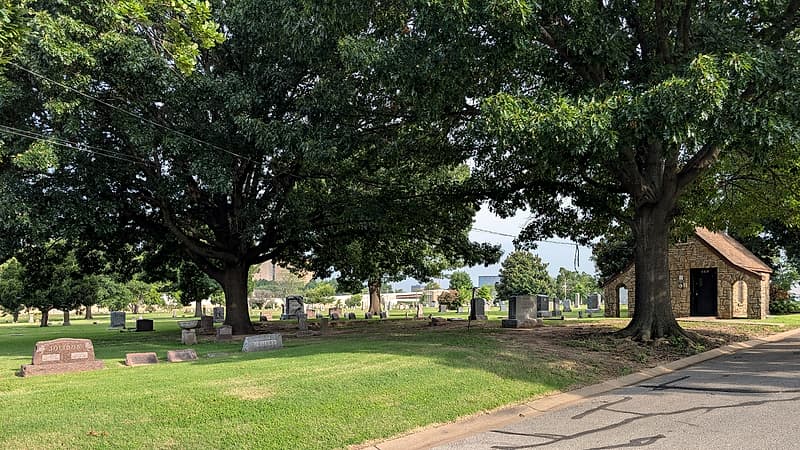
The statutory order of who controls disposition, written directions made in advance, the itemized price disclosures a funeral provider owes, prepaid contracts and the trust behind them, cemetery plot rights, cremation authorization, and disinterment.
Under the Funeral Rule a provider must give accurate price information to anyone who asks by telephone, drawn from its price lists or other readily available information. No name or telephone number may be required first, and no appointment may be demanded. Once a discussion of arrangements begins in person, a printed general price list must be handed over, and casket and container lists must arrive before those goods are shown. Price lists must be kept for inspection.
State law authorizes disposition methods by name. Conventional burial and cremation are available everywhere; alkaline hydrolysis and natural organic reduction exist only where a statute defines the process and licenses the facility. Natural burial is not a separate legal method but a set of cemetery rules on chemicals, containers and vaults. What each produces differs, and the destination rules that follow depend on how the statute classifies the output.
Maintenance of a cemetery is funded by an endowment care fund built from a percentage of each sale, with only the income spendable. Where the fund is absent or too small, statutes assign residual duties to townships or counties, often triggered only by a finding of abandonment. Descendants rarely compel maintenance but do hold statutory access rights to graves on private land, enforceable by injunction.
The Funeral Rule forbids a provider from conditioning goods or services on the purchase of a casket from that provider, and from charging any fee for handling a casket bought elsewhere. The general price list must carry a statement telling the buyer that individual items may be selected. A direct cremation may not require a casket, and an alternative container must be offered. Package pricing is permitted, but not if it is used to recover a handling charge the rule prohibits.
Cremated remains are not treated as waste, and most states allow wide freedom in placing them, subject to permission from whoever controls the place. Scattering on private land generally requires the owner's written permission, and statutes commonly require the remains to be removed from the container and left indistinguishable. National park units require a permit. Burial at sea falls under a federal general permit with a three nautical mile minimum and a reporting duty within thirty days.
In most states a cemetery conveyance transfers an exclusive right of interment in a described space, not fee title to the soil. The cemetery retains ownership, controls access and maintenance, and enforces recorded rules on markers, plantings and openings. Rights are transferable only with the cemetery's consent and a recorded assignment, and many cemeteries hold a right of first refusal. Unused rights pass by inheritance, and statutes set how a dormant right is reclaimed.
Before a cremation, most states require a signed authorization from the person entitled to control disposition, an identification procedure that ties a specific body to that authorization, clearance from the coroner or medical examiner, and a waiting period counted from death or from authorization. Crematories must run a tracking system that keeps an identifying tag with the remains throughout. Authorization forms are retained for years and are the first document a regulator asks for.
Moving remains from a grave requires the cemetery authority's consent, the written consent of the closest surviving relative under a statutory order, and a disinterment or removal permit from the health authority. Courts asked to authorize a move where consent is missing begin from a presumption that remains stay where they are, and look at the decedent's wishes, the reason for the move and the effect on other burials. Reinterment then follows the receiving cemetery's own rules.
Preneed funeral money is held either in a trust in the buyer's name or as premiums on a life insurance policy assigned to the provider. Trusting statutes set the percentage that must be deposited, commonly a high fraction or the whole payment, and limit what may be withdrawn before death. A guaranteed contract fixes the price of listed goods; a non-guaranteed one only holds the money. Portability depends on whether the contract is revocable and whether the trust follows the buyer or the seller.
Most states let a person name, in a signed writing, the individual who will direct disposition of the body. A valid appointment displaces the spouse, the children and everyone else on the priority list. Formalities vary: some statutes require two witnesses, some a notarial acknowledgment, some either. The document only works if the establishment can read it within hours of death, so storage matters more than drafting. Revocation is by a later signed writing.
Nearly every state has a right-of-disposition statute that ranks the people who may direct burial, cremation or another authorized method. An agent named in a signed writing normally sits at the top, followed by spouse, adult children, parents and siblings. Within a rank, most statutes accept a majority of those reachable. A person charged with causing the death, or one who will not act in the statutory window, drops out. A provider facing a real dispute may hold the body and wait for a court.