Ten Years of Presence and the Brief Departures That Break It
Ten years of continuous physical presence is the first element of cancellation of removal for someone who never held a green card. The statute counts departures rather than intentions, and two numbers decide whether a trip abroad destroyed the claim.
The rule in short
Cancellation of removal for a non-permanent resident requires ten years of continuous physical presence immediately preceding the application. Presence is broken by any single departure exceeding ninety days or by departures totaling more than one hundred eighty days. A qualifying period of military service removes the requirement entirely. The applicant carries the burden of proving presence, and the proof is documentary rather than testimonial.
Cancellation of removal for someone who has never held permanent residence has four elements, and the first is the one most often lost before the case begins. The applicant must have been physically present in the United States for a continuous period of not less than ten years immediately preceding the application. Everything else in the case is irrelevant if that decade cannot be proved.
What continuous means
The statute does not leave continuity to interpretation. A person is considered to have failed to maintain continuous physical presence if he or she departed from the United States for any period in excess of ninety days, or for any periods in the aggregate exceeding one hundred eighty days.
Those are two independent tests, and either one breaks the clock. A single trip of ninety-one days ends the period regardless of how many years surround it. Six trips of thirty-one days each end it too, because the aggregate exceeds one hundred eighty even though no individual absence came close to the ninety-day limit.
When the clock breaks, it does not pause. A new ten-year period begins on the return, which is why a departure in the ninth year is so costly. The decade must also run immediately before the application, so a decade completed and then interrupted years earlier does not help.
Counting the days
Counting is where cases are won and lost, and the arithmetic is unforgiving because it depends on records rather than recollection. Every trip counts, however short and however routine. A weekend across a land border, a funeral abroad, a two-week visit to a sick parent: each adds to the aggregate total.
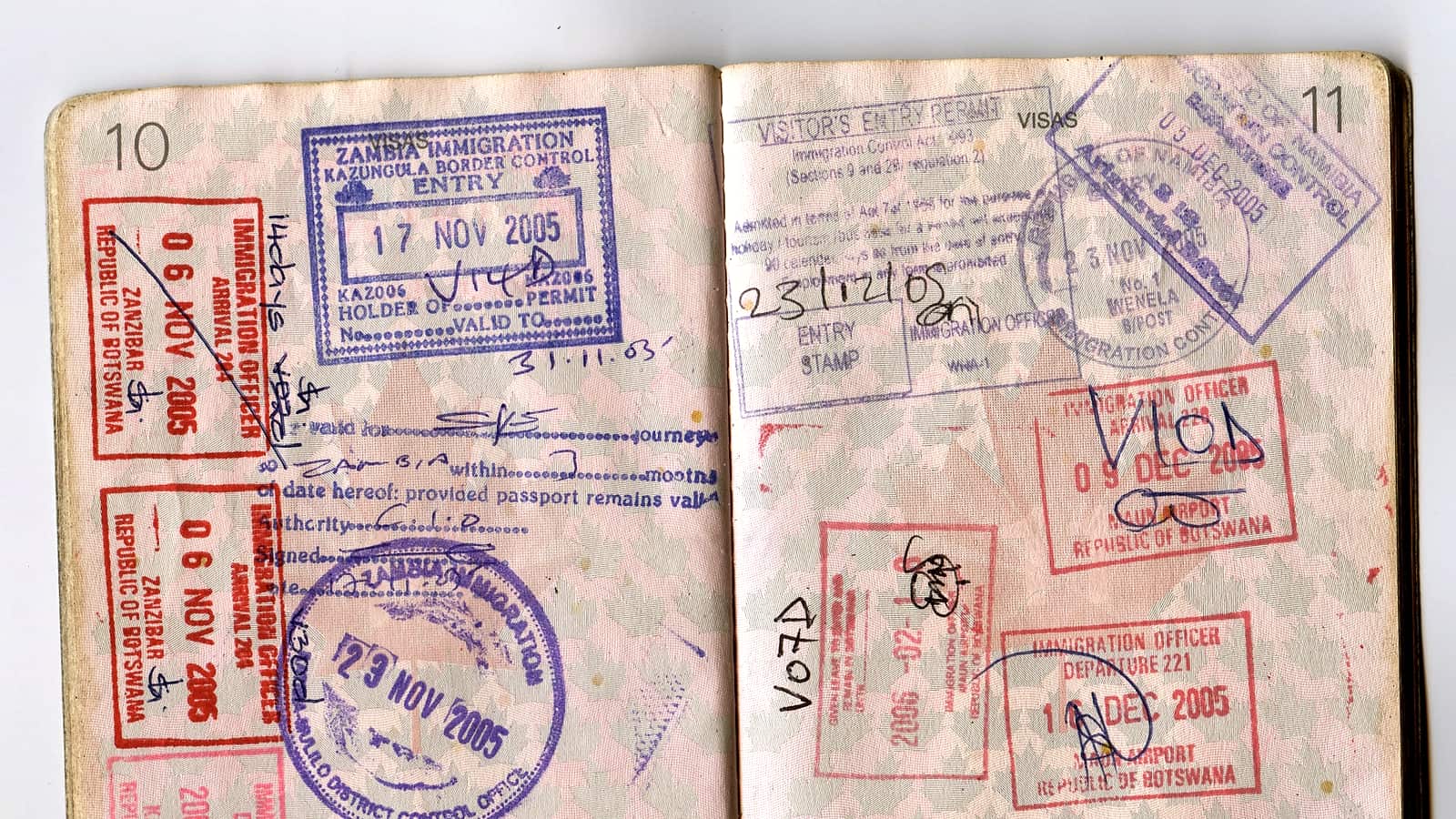
People underestimate this consistently. A pattern of annual visits home, each lasting three weeks, reaches the one-hundred-eighty-day threshold in the ninth year without any single trip looking remarkable. The government holds crossing and departure records that document trips the applicant has forgotten, and those records surface at the merits hearing rather than before it.
The safer practice is to build the travel history first, from passport stamps, airline records, the person's own recollection and any records obtainable from the government, and to total it before deciding whether the application is worth filing. An application that fails on presence still puts the person's history in front of a judge and closes off the option of waiting.
Testimony that conflicts with a stamp in a passport does more damage than the absence itself. Where the count is close, the honest answer is that the element is contested and the filing has to address it directly, with the arithmetic set out rather than assumed.
| Pattern of absence | Effect on presence | Why |
|---|---|---|
| One trip of eighty-five days | Presence continues | Under ninety days and well under the aggregate limit |
| One trip of ninety-five days | Presence broken | A single absence in excess of ninety days |
| Seven trips of thirty days each | Presence broken | Aggregate of two hundred ten days exceeds one hundred eighty |
| Five trips of thirty days each | Presence continues | Aggregate of one hundred fifty days is within the limit |
| Departure under threat of proceedings | May be broken regardless of length | Agency case law treats such a departure as a break; circuits differ |
The ninety-day and one-hundred-eighty-day limits are not the only way presence ends. Agency case law treats a departure made under threat of removal proceedings, including one accepted at a border in place of a hearing, as breaking continuity whatever its length. Circuits have not treated that principle identically, so the answer can depend on where the case is heard. A turnaround at a port of entry deserves careful attention rather than being dismissed as a brief absence.
The exception for military service
One route removes the requirement rather than satisfying it. The continuous presence and continuous residence requirements do not apply to a person who has served for a minimum period of twenty-four months in an active-duty status in the Armed Forces of the United States, who was separated under honorable conditions if separated at all, and who was in the United States at the time of enlistment or induction.
This exception is written into the same subsection that contains the departure limits, and it applies to both the resident and non-resident versions of cancellation. Where it applies, service records replace a decade of documentary reconstruction, which makes it worth checking in any case involving military history.
Proving a decade
The applicant carries the burden of establishing eligibility, and presence is proved with paper. The records that work are the ones created contemporaneously for some other purpose: filed tax returns and wage statements, leases and rent receipts, utility accounts, bank statements, school enrollment and report cards for children, medical and dental records, insurance policies, vehicle registrations, remittance receipts and place-of-worship records.
The organizing principle is coverage rather than volume. A filing that produces two or three dated items for every year of the decade is stronger than one producing forty documents clustered in three years. Where a year is thin, the gap is bracketed by records on either side and explained in the declaration rather than left for the judge to notice.
Presentation matters as much as content. A chronological index listing each exhibit against the year it covers lets a judge see the coverage at a glance, and it exposes gaps to the person preparing the filing while there is still time to close them. Filings assembled by document type rather than by year tend to hide the thin periods until the hearing.
Foreign-language records need certified translations, and records that arrive after a filing deadline may not be accepted at all. The court sets deadlines for documentary submissions and enforces them, so the collection effort has to start well before the merits hearing rather than in the weeks preceding it.
Sworn statements from relatives, employers and neighbors supplement documents but rarely replace them, and a statement that merely asserts the person has been here for years adds little. A statement describing specific shared events, addresses and dates carries more. Because the whole element can turn on how a decade of paper is assembled and presented, this is work that benefits from a cancellation of removal lawyer reviewing the record before it is filed.
Where the clock stops on its own
Departures are not the only thing that ends the period. A separate rule terminates continuous presence when a charging document is served, and also when certain offenses are committed, whichever comes first. That mechanism operates independently of any travel and is set out in the stop-time rule and when continuous presence ends.
Presence is only the first element. The application still requires good moral character during the period, the absence of disqualifying convictions, and a showing of exceptional and extremely unusual hardship to a qualifying relative, which is dealt with in proving hardship to a qualifying relative. Someone who was lawfully admitted for permanent residence is measured against a different set of elements entirely, compared in cancellation for a green card holder.
Points to carry away
- The requirement is ten years of continuous physical presence immediately preceding the application.
- A single absence longer than ninety days breaks continuous physical presence.
- Absences adding up to more than one hundred eighty days break it even if each trip was short.
- Twenty-four months of active-duty service under honorable conditions removes the presence requirement.
- The applicant bears the burden of proving presence, and documentary proof carries more weight than testimony.
Questions readers ask
Does presence have to be lawful?
No. The element is physical presence, not lawful status, and someone who has never held any status can satisfy it. That is the difference between this form of relief and the version available to permanent residents, which requires lawful admission and a period of residence after admission. Lawful status still matters elsewhere in the analysis, because the good moral character element and the criminal bars are assessed separately and can defeat an application built on an otherwise solid decade of presence.
Do short trips across a land border count as departures?
A departure is a departure regardless of how far the person went or how long the return took. A day trip counts toward the aggregate total, and a series of them can build toward the one-hundred-eighty-day figure faster than people expect. Border crossing records held by the government frequently document these trips even where the person does not remember them, which is why the government's own records are worth obtaining before an application is filed rather than after.
What proves presence for a year in which almost nothing was documented?
Gaps are common and they are not automatically fatal. The usual approach is to bracket the gap with dated records on either side and to fill it with whatever exists: a lease covering the period, school enrollment for a child, a medical visit, a remittance receipt, a church or union record. Sworn statements from people who saw the person during the period help but rarely carry a gap alone. The strongest filings explain the gap rather than passing over it.
Sources
- 8 U.S.C. § 1229b — Cancellation of removal; adjustment of statusSets the ten-year presence element, the ninety-day and aggregate limits, and the military service exception.
- 8 C.F.R. § 1240.20 — Cancellation of removal and adjustment of statusGoverns where a cancellation application is filed and how it is adjudicated.
- 8 C.F.R. § 1240.8 — Burdens of proof in removal proceedingsPlaces the burden of establishing eligibility for relief on the applicant.
- 8 U.S.C. § 1229a — Removal proceedingsSets the evidentiary standards and corroboration rules applied to applications for relief.
- EOIR Forms and FeesThe application forms used for cancellation of removal and the fees attached to them.
- EOIR Policy Manual, Part II, Chapter 3 — Hearings before the Immigration JudgesDescribes filing deadlines and the presentation of documentary evidence at a merits hearing.
Metro Law Advisors is a publication, not a law firm. This article states general rules and cites its sources; it is not advice about any particular case, and the law differs by state and changes over time.
More in Removal Defense

Calling an Expert Witness in Immigration Court
There is no formal admissibility test for expert testimony in immigration court, so the judge decides qualification and weight in the same breath. The written report filed before the hearing does most of the work: it establishes qualifications, states the materials reviewed, sets out the methodology and connects the opinion to the individual applicant. Filing deadlines are enforced, and an expert not listed by the deadline may not be heard.

Proving Hardship to a Qualifying Relative
Cancellation of removal for a non-permanent resident requires exceptional and extremely unusual hardship to a citizen or permanent resident spouse, parent or child. The list of qualifying relatives is closed, hardship to the applicant does not count, and the standard demands hardship substantially beyond what ordinarily follows from removal. The record must address both the relative staying behind and the relative leaving, because the judge considers each possibility.

Reopening for Ineffective Assistance and the Notice It Requires
A motion to reopen based on ineffective assistance is expected to include a detailed affidavit setting out what was agreed with the former representative and what was represented, evidence that the former representative was informed of the allegations and given an opportunity to respond, and a statement whether a disciplinary complaint has been filed and if not why not. Prejudice must also be shown, and the ordinary ninety-day limit still applies.