Banned Hazardous Substances and Products That May Not Be Sold
A ban is not a recall. It is a rule declaring that a category of article may not enter commerce at all, made because cautionary labeling cannot address the hazard or because no feasible performance standard would protect the public.
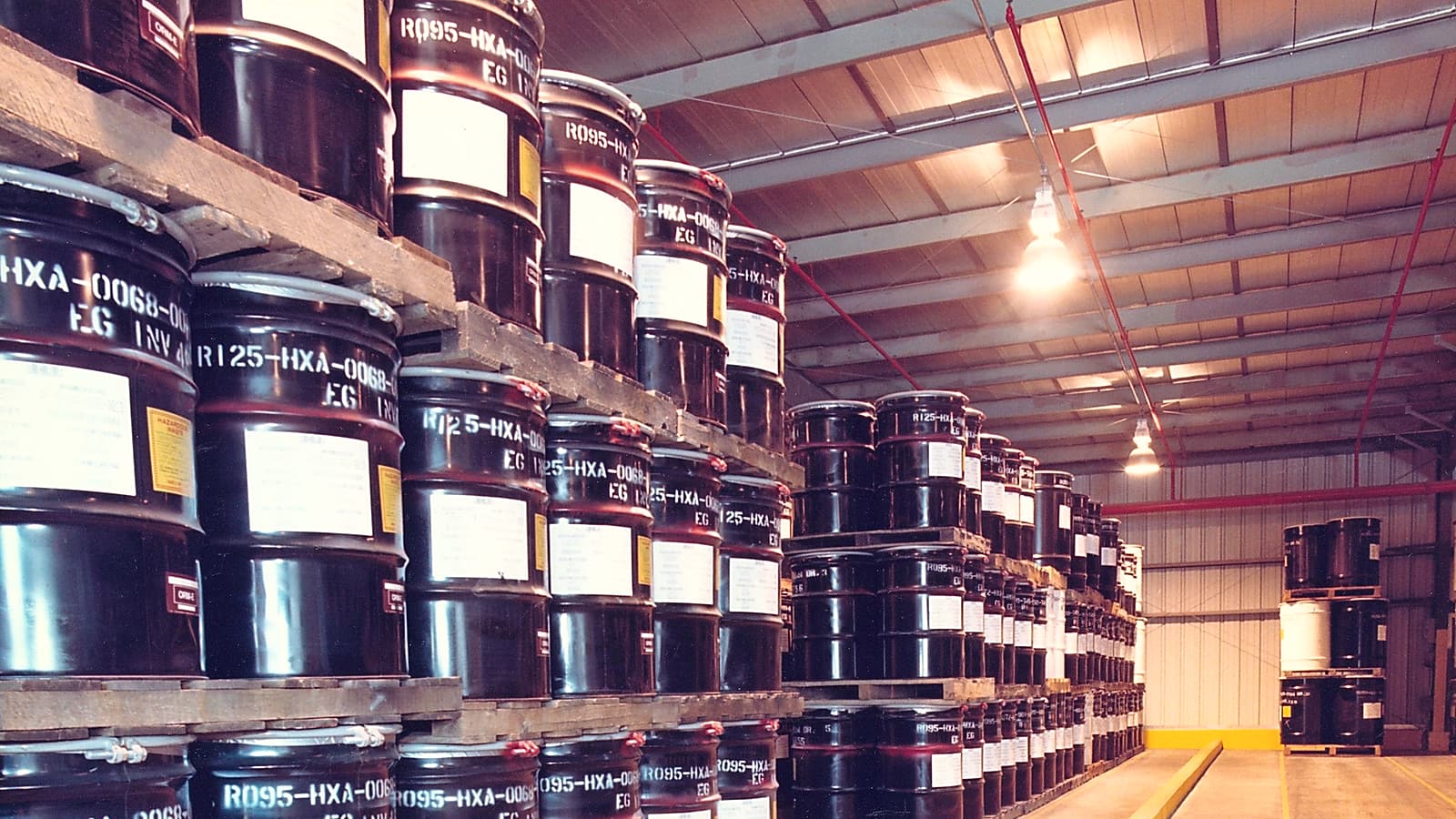
The rule in short
Two statutes supply banning power. Under the hazardous substances law, an article may be declared a banned hazardous substance where it is so hazardous that adequate cautionary labeling cannot be written, or where it is intended for children and its hazard cannot be addressed by labeling. Under the product safety law, a product may be declared a banned hazardous product where no feasible standard would adequately protect the public. Both operate by rule and reach the whole distribution chain.
A ban is the strongest tool in the consumer product statutes and the least often used. It does not require a defect, an incident or a recall. It declares that a category of article may not be introduced into commerce at all, and once made it binds everyone in the chain regardless of what they knew.
Two powers, two tests
The hazardous substances law reaches articles that are hazardous in themselves. An article may be declared a banned hazardous substance where it is intended or suitable for use in the household and presents such a degree or nature of hazard that adequate cautionary labeling cannot be written and public health can be served only by keeping it out of commerce. A parallel branch bans toys and other articles intended for use by children that bear or contain a hazardous substance a child can access.
The product safety law reaches products that are not chemically hazardous but cannot be made safe by a performance standard. A product may be declared a banned hazardous product where it presents an unreasonable risk of injury and no feasible consumer product safety standard would adequately protect the public from that risk.
The tests differ in what they ask. The first asks whether a warning could do the job. The second asks whether a rule about how the product must perform could do the job. In both cases the ban is a conclusion that the ordinary regulatory tool is inadequate.
What the substance ban currently reaches
The banned hazardous substances rule is a list, and reading it is more instructive than any summary. It bans mixtures intended for application to interior masonry as a water repellant treatment where they are extremely flammable. It bans carbon tetrachloride and mixtures containing it, subject to a residue tolerance.
It bans fireworks devices intended to produce audible effects where the effect comes from more than a stated quantity of pyrotechnic composition, with an exception for devices distributed to farmers and ranchers through an administered wildlife management program on written application. It bans liquid drain cleaners containing ten percent or more by weight of sodium or potassium hydroxide, except where packaged in accordance with a special packaging standard. It bans products containing soluble cyanide salts above a residue level.
Lead paint appears in both regimes. Paint and similar surface coating materials for consumer use with lead content above the current limit are banned hazardous products, as are toys and other children's articles and furniture articles bearing such paint.
| Mechanism | Test applied | Typical subject | Effect on existing stock |
|---|---|---|---|
| Banned hazardous substance | No adequate cautionary label could be written | Chemicals and mixtures for household use | Cannot be introduced or delivered into commerce |
| Banned toy or children's article | Hazard accessible to a child, not curable by labeling | Toys with mechanical, electrical or thermal hazards | Cannot be sold; exemptions apply only if the stated conditions are met |
| Banned hazardous product | No feasible performance standard would adequately protect | Whole product categories with unreasonable risk | Manufacture, import and distribution prohibited |
| Misbranding | Adequate labeling exists but was not supplied | Hazardous substances with defective labels | Can be brought into conformity by relabeling |
Children's articles and the accessibility question
The children's branch of the ban does the most day-to-day work. A toy or other article intended for use by children that bears or contains a hazardous substance is a banned hazardous substance if a child can gain access to the substance, whether by ingestion or otherwise.
Accessibility is assessed after the product has been through the use and abuse testing the rules prescribe. A substance sealed inside a housing that survives testing is not accessible; the same substance behind a housing that opens under those conditions is. The tests differ by the age of the intended user, running from articles for children eighteen months and under through to articles for children up to ninety-six months.
Exemptions exist and are specific. Certain articles are exempted from classification as banned hazardous substances, and certain children's articles are exempted from classification as banned articles, where the conditions in those provisions are satisfied. Reliance on an exemption means matching the product against the text rather than reasoning by analogy. The related mechanical hazards are handled through the small parts and age grading rules described under lead limits, small parts and age grading.
Firms sometimes assume a banned product must have been shown to injure someone. Neither test requires that. The hazardous substances branch turns on whether a label could cure the hazard, and the product safety branch turns on whether a standard could. A product with no incident history at all can be banned if the hazard it presents is not one that labeling or performance requirements can address, and the absence of injuries is not a defense to the prohibition.
Who the prohibition binds
The prohibited acts provisions reach the whole chain. It is unlawful to introduce or deliver for introduction into interstate commerce any banned hazardous substance, and equally unlawful to receive one in interstate commerce and to deliver or offer it for delivery. Manufacturing a banned hazardous substance in a territory or the District of Columbia is separately prohibited.
Under the product safety law, manufacturing for sale, offering for sale, distributing in commerce and importing a banned hazardous product are all prohibited acts, and the prohibition does not require knowledge for the act itself, though knowledge affects the penalty.
Importers occupy an exposed position. Products offered for import that are banned are subject to refusal of admission, and a firm that clears goods and discovers the problem later holds inventory it cannot lawfully sell. The exposure runs through to secondhand and clearance channels, which is the subject of reselling recalled and non-compliant goods.
How a ban is made and unmade
Bans are rules. They are made through notice and comment rulemaking, supported by findings, and are subject to judicial review on the record. A ban may also be reached by a court in an action concerning an imminently hazardous product, though that route addresses a particular product rather than a category.
Because the ban is a rule, it can be amended and narrowed, and the current text is the only reliable statement of scope. Provisions in the older lists have been revoked or superseded where a comprehensive rule was later issued under the other statute, and reading the historical version of a list is a common source of error.
For a firm, the practical work is periodic. Product categories drift into scope as formulations change and as new rules issue, and a compliance program built once against a snapshot of the lists will decay. The same discipline applies to the certification obligations set out under children's product certification and third-party testing, where a rule that becomes applicable to a product carries a testing and certificate obligation with it.
Points to carry away
- A banned hazardous substance is one whose hazard cannot be addressed by any adequate cautionary label.
- Toys and children's articles bearing a hazardous substance are banned unless a stated exemption applies.
- A banned hazardous product is declared where no feasible consumer product safety standard would adequately protect the public.
- Bans reach manufacture, import, offering for sale, distribution and delivery, not only retail sale.
- Exemption from a ban is available by rule in defined circumstances, and is granted on the record rather than informally.
Questions readers ask
What is the difference between a banned substance and a misbranded one?
Misbranding is a labeling failure: the article is hazardous, adequate cautionary labeling could address it, and the label supplied does not. The article can lawfully be sold once the label is fixed. A ban is a determination that no label would be adequate, so there is nothing to fix. The distinction matters for remedy as well as classification, because a misbranded product can be brought into conformity through relabeling while a banned one has to leave commerce entirely.
Do bans apply to products that were lawful when made?
The prohibition attaches to acts, not to the date of manufacture, so introducing or delivering a banned article into interstate commerce is unlawful whenever it happens. Some ban rules are drafted to apply to products manufactured after a stated point, which limits their reach to later production. Where a ban rule contains no such limitation, older stock is caught. Firms holding inventory when a ban takes effect cannot sell it through, and disposal rather than discounting is the only lawful route.
Can a ban be challenged or an exemption obtained?
Both are possible and both run through process rather than correspondence. Ban rules are made by rulemaking with notice and comment, and are subject to judicial review on the record. Exemptions are provided for by rule: certain articles are exempted from classification as banned hazardous substances, and certain toys are exempted from classification as banned articles, where the stated conditions are met. A firm relying on an exemption should be able to point to the provision, not to a general argument about reasonableness.
Sources
- 15 U.S.C. § 1261 — DefinitionsDefines hazardous substance, banned hazardous substance and misbranded package.
- 15 U.S.C. § 1263 — Prohibited actsMakes introducing or delivering a banned hazardous substance into commerce unlawful.
- 15 U.S.C. § 2057 — Banned hazardous productsPermits a ban where no feasible product safety standard would adequately protect the public.
- 16 CFR § 1500.17 — Banned hazardous substancesThe current list of articles declared banned hazardous substances by rule.
- 16 CFR § 1500.18 — Banned toys and other banned articles for childrenLists the children's articles banned because of mechanical or other hazards.
- 16 CFR § 1303.4 — Banned hazardous productsBans lead-containing paint and consumer products bearing it.
- 16 CFR § 1500.86 — Exemptions from classification as a banned articleSets the conditions under which a children's article escapes the ban.
Metro Law Advisors is a publication, not a law firm. This article states general rules and cites its sources; it is not advice about any particular case, and the law differs by state and changes over time.
More in Product Safety & Recalls
Tracking Labels on Children's Products
A manufacturer of a children's product must place permanent distinguishing marks on the product and its packaging, to the extent practicable, that enable the manufacturer to ascertain the location and date of production and cohort information such as a batch or run number, and enable an ultimate purchaser to determine the source, the date of production and detailed information about the manufacturing process. The mark supports recall targeting and consumer identification.
When a Recall Stops Being Voluntary
A voluntary corrective action is a negotiated plan agreed with staff and publicly announced. A mandatory recall requires the Commission to determine, after affording interested persons an opportunity for a hearing, that a product distributed in commerce presents a substantial product hazard and that notification or remedy is in the public interest. The compulsory route offers procedural protections the negotiated route does not, at the cost of time, cost and publicity.
Reselling Recalled and Non-Compliant Goods
It is a prohibited act to sell, offer for sale, distribute in commerce or import a consumer product that is subject to a voluntary corrective action taken in consultation with the Commission and publicly announced, or subject to an order requiring notification or remedy. The same prohibitions apply to banned hazardous products and banned hazardous substances. Liquidation, clearance and secondhand channels are the routes through which recalled stock most often reappears.