Reselling Recalled and Non-Compliant Goods
The prohibition is drafted around acts rather than around knowledge, and it does not stop at the original manufacturer. Anyone who sells, offers for sale, distributes in commerce or imports a recalled or banned product is inside it, whatever they paid for the stock.
The rule in short
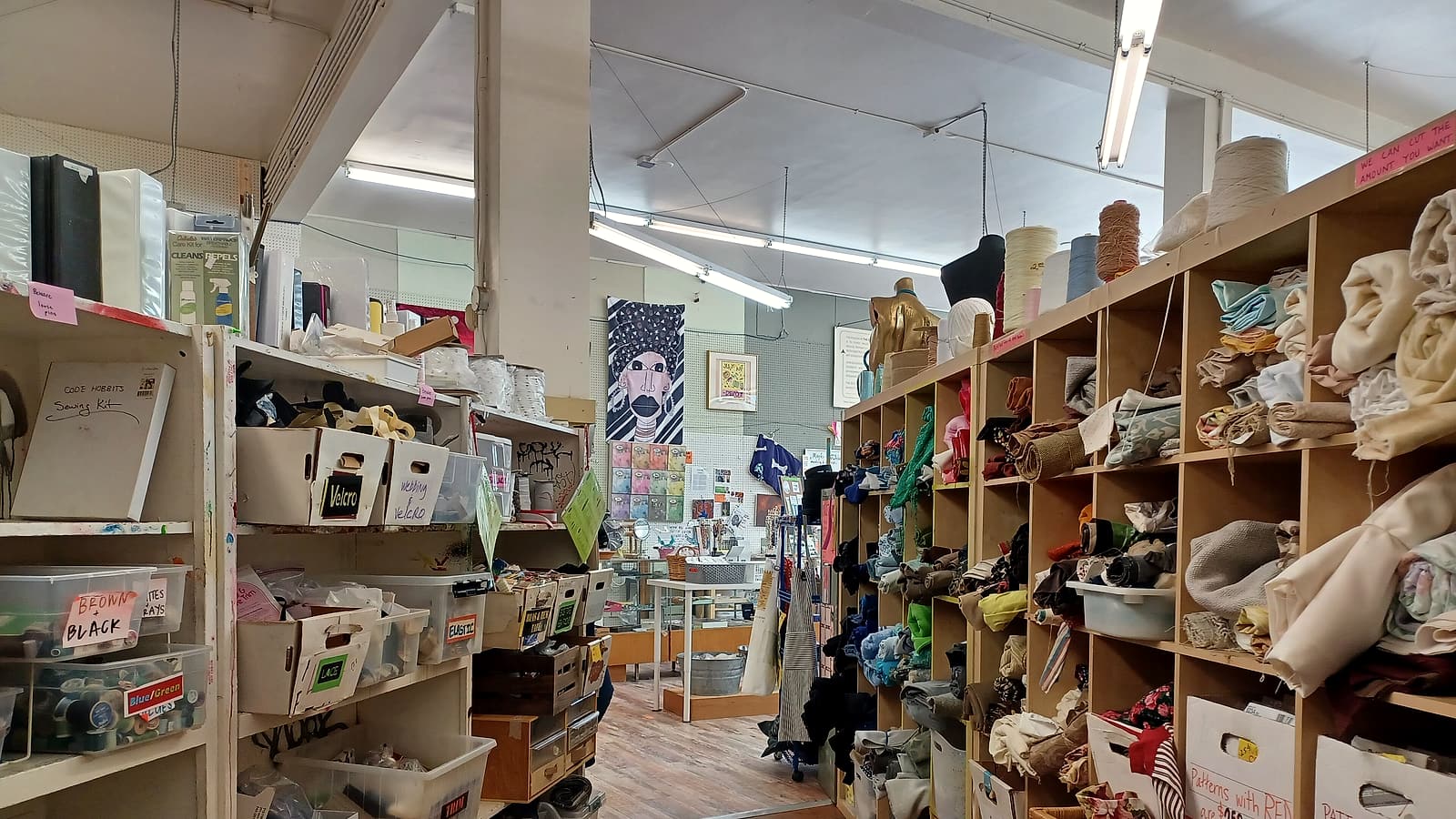
It is a prohibited act to sell, offer for sale, distribute in commerce or import a consumer product that is subject to a voluntary corrective action taken in consultation with the Commission and publicly announced, or subject to an order requiring notification or remedy. The same prohibitions apply to banned hazardous products and banned hazardous substances. Liquidation, clearance and secondhand channels are the routes through which recalled stock most often reappears.
Recalled products do not disappear when the announcement is made. They sit in returns processing, in distributor warehouses, in clearance lots and in the hands of consumers who never saw the notice, and from every one of those places they can re-enter commerce. The statute addresses this by prohibiting the acts rather than by chasing the goods.
What the prohibition actually says
It is unlawful for any person to sell, offer for sale, manufacture for sale, distribute in commerce or import into the United States a consumer product that is subject to a voluntary corrective action taken by the manufacturer in consultation with the Commission, where the action has been publicly announced.
The same prohibitions apply to a product subject to an order requiring notification, or requiring repair, replacement or refund. And they apply to banned hazardous products, which are prohibited independently of any recall.
Under the hazardous substances law a parallel set of prohibitions covers introducing or delivering for introduction into interstate commerce any banned hazardous substance, receiving one in interstate commerce and delivering or offering it for delivery, and manufacturing one in a territory or the District of Columbia.
Who the provision reaches
The prohibition is addressed to any person, not to the manufacturer. A distributor holding stock, a retailer with product on the shelf, a liquidator buying a pallet of returns, and an importer clearing a container are all inside it.
Knowledge is not an element of the prohibited act itself. It matters at the penalty stage, where the civil penalty provision applies to a person who knowingly violates the section and defines knowingly to include actual knowledge and the knowledge a reasonable person would have, including knowledge obtainable by exercising due care to ascertain the truth of representations.
That definition is the important one for resellers. A buyer of surplus or returned inventory who did not check whether the goods were recalled is not protected by ignorance, because the standard includes what due care would have revealed, and recall information is public and searchable.
| Channel | How recalled stock arrives | The control that usually fails |
|---|---|---|
| Returns processing | Units returned by consumers are refurbished and resold | No block placed on the model in the returns system |
| Liquidation lots | Mixed pallets sold by weight or by lot without item-level review | Buyer performs no recall check against model or code |
| Distributor inventory | Stock held offsite that was never included in the trade notice | Incomplete distribution list at the time of the recall |
| Online marketplaces | Individual and small-volume sellers list used units | No product-level marking that a seller could check |
| Charitable donation | Stock donated rather than destroyed | Donation treated as disposal rather than as distribution |
Secondhand goods and the limits of the rule
Consumer resale is where the framework runs out of reach. The prohibitions are directed at commerce, and a single private sale sits at the edge of that concept. What has changed the practical position is not the statute but the marketplace: much secondhand selling now happens on platforms that operate at scale and screen listings.
Two categories deserve separate attention. Children's durable goods circulate heavily through secondhand channels and are frequently the subject of recalls, which is why the marking and registration requirements exist. A crib or a stroller sold used may be the fifth household to own it, and the only link back to the recall is the mark on the product, discussed under tracking labels on children's products.
The second is refurbished electrical goods, where a repair may or may not have addressed the hazard that prompted the recall. A refurbisher selling a repaired unit that remains subject to a corrective action is selling a product subject to that action, and the repair does not remove it from scope unless it is the remedy the plan specifies.
Firms clearing recalled inventory sometimes propose donating it to a charity rather than destroying it, on the view that no sale occurs. Distributing in commerce is the operative concept and it is not limited to sale, so the transfer is within the prohibition. It also defeats the purpose of the recall, since the recipients are frequently the least likely to have seen the notice. The disposition of every unit is normally an undertaking in the plan, and destruction with a record is the route that satisfies it.
Controls that actually stop the leak
The controls that prevent recalled stock re-entering commerce are inventory controls rather than legal ones, and they have to be built before they are needed.
The first is a system-level block. Where a model or a production cohort is subject to an action, the inventory and point-of-sale systems should refuse to sell it, and the block should extend to returns processing and refurbishment rather than sitting only on the sales floor. Blocks applied at the model level without cohort granularity are blunt but safe; the reverse is neither.
The second is contractual. Liquidation and surplus sale agreements should record what is being sold and prohibit the resale of goods subject to a corrective action, with a right of return. That does not remove the seller's exposure but it establishes what was represented.
The third is documented destruction. Where units are to be destroyed, the record should show quantity, method, date of the operation and who witnessed it, and should reconcile against the units withdrawn. That reconciliation is part of the undertaking described under what a corrective action plan commits a company to.
The exposure if stock moves anyway
A knowing violation of the prohibited acts provision carries civil penalty exposure on a per-product basis, subject to a maximum for any related series of violations, with both figures adjusted for inflation by rule. A knowing and willful violation, after notice of noncompliance, can carry criminal liability.
The factors applied in setting a penalty include the nature of the defect, the severity of the risk, whether injury occurred, the number of products distributed and the size of the business, together with the firm's safety and compliance program, its history of noncompliance, any economic gain from the violation and its responsiveness to requests. Those are set out under civil penalties and the factors that set them.
The practical exposure is often larger than the penalty. A unit sold after a recall is a unit whose sale is documented, whose hazard is documented, and whose recall the seller can be shown to have been able to discover. In private litigation that combination is close to the worst available fact pattern, and it arises most often not from a decision but from a warehouse process nobody updated. The underlying prohibition on banned goods, which operates without any recall at all, is covered under banned hazardous substances.
Points to carry away
- Selling or offering a product subject to a publicly announced voluntary corrective action is a prohibited act.
- The prohibition also covers products subject to a notification or remedy order and banned hazardous products.
- The provision reaches distributors, retailers, liquidators and importers, not only the original manufacturer.
- Charitable donation and export do not necessarily cure the problem, and export of banned goods has its own rules.
- Recalled stock most often re-enters commerce through liquidation, returns processing and secondhand marketplaces.
Questions readers ask
Does the prohibition apply to a private individual selling one item?
The statutory prohibitions are framed around selling, offering for sale and distributing in commerce, which is aimed at commercial activity rather than at a single private transaction. That said, the boundary is not as comfortable as it sounds: someone selling regularly through an online marketplace is engaged in commerce, and platforms increasingly screen listings against recall data and remove them. The practical position for anyone selling used goods in volume is to check the item against recall notices before listing it.
Can recalled stock be sold abroad instead?
Not as a matter of course. Export of goods that do not conform to applicable consumer product safety requirements is regulated separately, and notification obligations may apply before the goods leave. Treating export as a disposal route for recalled inventory also runs against the corrective action plan, which will normally require the disposition of every unit to be documented. A firm that ships recalled stock overseas without addressing both points has created a second problem rather than solved the first.
What should a retailer do with recalled stock on its shelves?
Remove it from sale immediately, quarantine it so it cannot be picked up in a restock or returned to the floor, and follow the manufacturer's instructions for return or destruction with a record of what happened to each unit. The step retailers most often miss is the returns pipeline: units already in transit back from customers, or held in a returns processing center, are still inventory and are frequently the ones that reappear in a clearance lot months later.
Sources
- 15 U.S.C. § 2068 — Prohibited actsProhibits sale, offer, distribution and import of recalled and banned products.
- 15 U.S.C. § 2064 — Substantial product hazardsCreates the voluntary corrective actions and orders the prohibition refers to.
- 15 U.S.C. § 1263 — Prohibited actsThe parallel prohibitions covering banned and misbranded hazardous substances.
- 15 U.S.C. § 2069 — Civil penaltiesThe penalty exposure for a knowing violation of the prohibited acts provision.
- 15 U.S.C. § 2070 — Criminal penaltiesProvides for criminal liability where a violation is knowing and willful.
- 15 U.S.C. § 2066 — Imported productsGoverns refusal of admission and the treatment of non-conforming imports.
- 15 U.S.C. § 2067 — Exemption of exportsSets the conditions and notification obligations attached to exporting non-conforming goods.
Metro Law Advisors is a publication, not a law firm. This article states general rules and cites its sources; it is not advice about any particular case, and the law differs by state and changes over time.
More in Product Safety & Recalls
Tracking Labels on Children's Products
A manufacturer of a children's product must place permanent distinguishing marks on the product and its packaging, to the extent practicable, that enable the manufacturer to ascertain the location and date of production and cohort information such as a batch or run number, and enable an ultimate purchaser to determine the source, the date of production and detailed information about the manufacturing process. The mark supports recall targeting and consumer identification.
When a Recall Stops Being Voluntary
A voluntary corrective action is a negotiated plan agreed with staff and publicly announced. A mandatory recall requires the Commission to determine, after affording interested persons an opportunity for a hearing, that a product distributed in commerce presents a substantial product hazard and that notification or remedy is in the public interest. The compulsory route offers procedural protections the negotiated route does not, at the cost of time, cost and publicity.
Banned Hazardous Substances and Products That May Not Be Sold
Two statutes supply banning power. Under the hazardous substances law, an article may be declared a banned hazardous substance where it is so hazardous that adequate cautionary labeling cannot be written, or where it is intended for children and its hazard cannot be addressed by labeling. Under the product safety law, a product may be declared a banned hazardous product where no feasible standard would adequately protect the public. Both operate by rule and reach the whole distribution chain.