Titling an Abandoned Vehicle After a Lien Sale
The sale is the middle of the process, not the end. What produces a registrable vehicle is an application to the state agency, a search that identifies every interest holder, notice to each of them, and a certificate issued on the strength of that record.

The rule in short
Converting a possessory lien into a transferable title requires an application to the state vehicle agency, which supplies the registered owner and every recorded lienholder from the title record. Notice goes to each of them with a stated opportunity to pay or to oppose. Where no valid opposition is filed, the sale proceeds after publication and the buyer applies for a certificate of title supported by the lien sale documents.
A vehicle sitting in a lot is worth very little to the person holding it, because possession without a title is possession of scrap. The statutory procedure exists to convert a possessory lien into something a buyer can register, and every step in it is aimed at that outcome. The auction is the least important part.
The application that starts the process
The process begins with an application to the state vehicle agency rather than with an advertisement. The lienholder submits the vehicle's identifying information, the basis of the lien and the amount claimed, and requests the information necessary to give notice.
The agency responds with the record: the registered owner, the legal owner or lienholder of record, and in many states any other person known to have an interest. That response is the foundation of everything afterwards, because the notice obligation is measured against the persons the record identifies.
Applications are refused where the information supplied does not match a record, where the lien appears not to arise under the statute relied on, or where the vehicle is reported stolen. A refusal is not a formality to be worked around; it usually means the vehicle needs a different route entirely.
Timing matters at this stage more than most lienholders expect. Many statutes fix the point at which an application may be made by reference to how long the vehicle has been held, and an application filed too early is rejected while charges continue to accrue. Filing at the earliest permitted moment, rather than when the bill has grown large enough to be worth the trouble, is what keeps the eventual sale proceeds meaningful.
Searching beyond the obvious record
A single search of the home state record is often not enough. Three situations require more.
The first is an out-of-state registration. A vehicle plated elsewhere requires a search of the issuing state's records, which the home agency may facilitate but which takes time and lengthens the notice timetable accordingly.
The second is a vehicle with no plates and a partially legible identification number. Agencies commonly require a physical verification of the number before a record search is accepted, and where the number has been altered the matter becomes a law enforcement question.
The third is a recorded security interest that does not appear on the face of the title record, which occurs where a filing was made in another system. Lienholders on vehicles held as inventory or under commercial financing are the usual example.
| Step | What it produces | Where it fails |
|---|---|---|
| Application to the agency | The official record of interest holders | Identification number does not match a record |
| Record search | Names and addresses for the notice | Out-of-state plates requiring a second search |
| Notice to interest holders | An opportunity to pay or to oppose | Notice sent only to the person who left the vehicle |
| Opposition window | Either a clear path to sale or a court proceeding | Sale conducted despite a valid declaration of opposition |
| Sale and title application | A certificate issued to the buyer | Documents incomplete, leaving the buyer unable to register |
Notice to everyone the record names
Notice goes by certified mail to the registered owner, to the legal owner or lienholder of record, and to any other person the record identifies. The content is prescribed and typically includes the vehicle description, the amount of the lien, the basis of the claim, the intended date and place of sale, and a statement of the recipient's right to a hearing or to file a declaration of opposition.
The point of notifying lienholders is commercial rather than ceremonial. A finance company with a security interest in a vehicle worth more than the repair or storage bill will usually pay the lien to protect its collateral, which resolves the matter without a sale. A lienholder that never received notice has been deprived of that choice, and that is the basis on which sales are set aside.
Publication follows the individual notices in most states, in a newspaper of general circulation, for a stated period before the sale. Publication does not substitute for individual notice where an interest holder is identifiable.
Statutes generally allow a recipient of the notice to file a declaration of opposition within a stated period. Where a valid declaration is filed, the lienholder may not sell without obtaining a court order, and proceeding anyway converts a regulated sale into a conversion of the vehicle. Lienholders sometimes treat an opposition as an obstacle to be waited out; it is a redirection of the entire process into a different forum.
The sale and the documents it generates
Where no valid opposition is filed and the waiting periods have run, the sale proceeds. It must be conducted in the manner the statute prescribes and at the advertised time and place.
What the sale produces, from the buyer's point of view, is a set of documents rather than a car. The certificate of sale or equivalent instrument, the notices with proof of mailing, the agency's record response and the publication affidavit together form the application package the buyer submits for a title.
A missing document is a practical disaster. The buyer holds a vehicle that cannot be registered, the seller has been paid, and the only route back is to reconstruct a record that in many cases cannot be reconstructed. That is why the file matters more than the price achieved.
Proceeds are applied to the lien and to the costs of the sale, with any surplus handled as the statute directs, commonly by deposit with a state agency for the benefit of the former owner. The parallel structure in storage lien sales is described under applying the proceeds and what happens to a surplus.
What the buyer actually receives
The certificate issued at the end is an ordinary title in most respects, though many states brand it to show that it was issued following a lien sale, which affects resale value and is not something the buyer can remove.
Whether it passes free of the recorded interests depends entirely on whether the procedure was followed. A sale conducted after notice to every identified interest holder generally extinguishes or subordinates those interests. A sale conducted without notifying a recorded lienholder does not, and the lienholder can pursue the vehicle in the buyer's hands.
This is the reason the process is front-loaded. Almost all of the legal work happens before the sale, in the application, the searches and the notices, and almost none of it can be repaired afterwards. The lien that the whole procedure enforces is described under the repair lien on a vehicle left with a shop, and where the vehicle arrived through a tow, the charges it secures and their limits are covered under vehicle storage charges and the caps on them.
Points to carry away
- The state vehicle agency supplies the names of the registered owner and recorded lienholders from the title record.
- Notice must reach every identified interest holder, not only the person who left the vehicle.
- A valid declaration of opposition generally forces the lienholder into court before any sale.
- Out-of-state plates require a search of the issuing state's records, which lengthens the timetable.
- The buyer obtains title by presenting the lien sale documents rather than a signed certificate from the former owner.
Questions readers ask
What happens if the registration record is out of date?
The obligation is to notify the persons the record identifies, which protects the lienholder even where the record is stale. A notice sent to the address on file and returned undelivered generally satisfies the requirement, because the alternative would make the process impossible. It does not protect against a known better address. Where the lienholder holds correspondence showing a current address, or where the person who left the vehicle gave one, sending only to the stale record address is a decision that will be examined later.
Can a vehicle with no identifying numbers be titled this way?
It is difficult, because the whole procedure runs off the identification number and the record it retrieves. Where the number is missing, obliterated or does not return a record, agencies typically require additional steps: an inspection to verify the vehicle's identity, a check against stolen vehicle records, and sometimes a bonded title rather than an ordinary one. A vehicle whose number appears to have been removed is a matter for law enforcement before it is a matter for a lien sale.
Does the buyer take free of the recorded lienholders?
That depends on whether the procedure was followed. The point of notifying every recorded interest holder is to give each a chance to pay the lien and protect its position, and a sale conducted after proper notice generally passes title free of those interests. A sale conducted without notifying a recorded lienholder does not, and the lienholder can pursue the vehicle in the buyer's hands. That is why the search step, rather than the auction, is the part of the process that determines what the buyer actually gets.
Sources
- California Civil Code § 3071 — Lien sale procedureSets the application, the agency search, notice to interest holders and the sale.
- California Civil Code § 3072 — Lien sale of lower value vehiclesThe shorter procedure applicable below a stated vehicle value.
- California Civil Code § 3073 — Effect of the saleAddresses the effect of a lien sale conducted under the statutory procedure.
- California Vehicle Code § 22851 — Lien on a removed vehicleCreates the possessory lien that the sale procedure enforces.
- California Vehicle Code § 22855 — Disposition of unclaimed vehiclesGoverns the disposition of a vehicle that is not reclaimed from storage.
- Florida Statutes § 713.585 — Enforcement by sale of a motor vehicleSets the notice to registered owners and lienholders and the sale requirements.
- Florida Statutes § 713.78 — Liens for recovering, towing or storing vehiclesThe towing and storage lien route and its own notice and title provisions.
Metro Law Advisors is a publication, not a law firm. This article states general rules and cites its sources; it is not advice about any particular case, and the law differs by state and changes over time.
More in Liens & Towing

Signage That Makes a Private Tow Lawful
Statutes authorizing removal of a vehicle from private property without the owner's consent generally require a sign posted in plain view at each entrance, of a stated minimum size with lettering of a stated height, prohibiting unauthorized parking, stating that vehicles will be removed at the owner's expense, and giving telephone numbers. Where the sign does not comply, the tow is unauthorized and statutes commonly impose double charges or other liability.
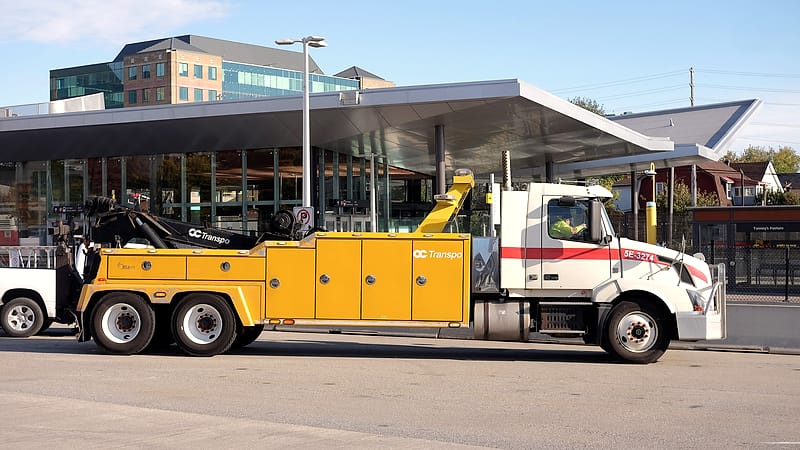
Getting a Towed Vehicle Back and Contesting the Charge
After a vehicle is stored, notice must be given to the registered and legal owners within a short statutory window, stating where the vehicle is, why it was removed and how to request a hearing. Release is generally required within a stated time of the request, the owner may inspect before accepting, and no waiver of damage claims may be required as a condition. A poststorage hearing determines whether reasonable grounds for the storage existed.

The Repair Lien on a Vehicle Left With a Shop
Statutes give a person who performs labor or supplies materials on a vehicle a lien on it for the reasonable value of the work. The lien is possessory: it depends on retaining the vehicle and is generally lost by voluntary surrender, without revival when the vehicle returns. It secures only authorized work, so a shop that exceeds a written estimate or works without authority may hold no lien for the excess.