Property a Lien Sale Cannot Simply Sell
An auction transfers what the operator can convey. A titled vehicle needs the title machinery, a firearm needs a lawful transfer, and a box of personal records carries obligations that selling it does not satisfy and may worsen.

The rule in short
A lien sale conveys personal property, but several categories sit outside the ordinary auction. Titled vehicles and watercraft usually require the vehicle lien and titling route rather than a household goods sale. Firearms require a lawful transfer channel. Personal records, identity documents and medical or financial papers carry privacy and disposal duties that a sale does not discharge and may breach.
A lien sale conveys what the operator has the power to convey. For most of a unit's contents that is straightforward: household goods pass to the buyer and the occupant's remedy, if any, lies against the facility. For a handful of categories the ordinary auction either cannot transfer good title or transfers a problem along with the goods.
Titled vehicles and watercraft
A car, motorcycle, trailer or boat in a storage unit is not an ordinary chattel. Ownership is evidenced by a certificate of title, a registry records lienholders, and a buyer who takes possession without a title has bought something they cannot register, insure or lawfully sell on.
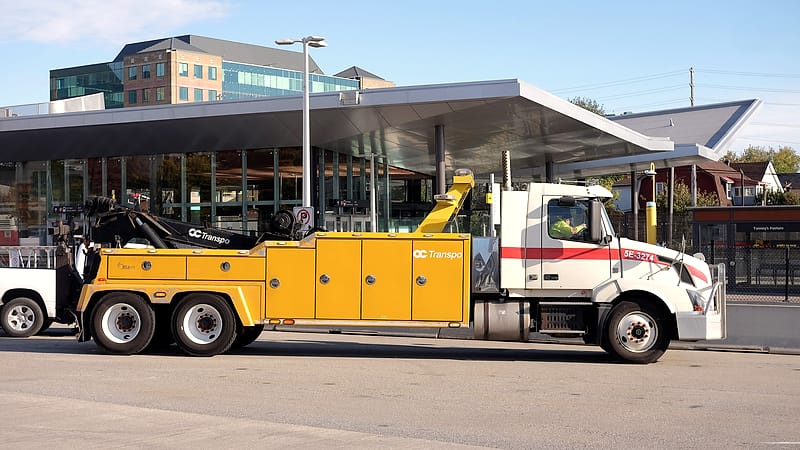
Statutes address this in two ways. Some give the operator a choice: where rent and other charges related to a motor vehicle or watercraft remain unpaid for a stated period after the obligation matured, the operator may sell the property under the storage act or have it towed. Where it is towed, the wrecker taking possession must comply with the notification and sale requirements of the vehicle lien statute, and the operator is relieved of liability for the vehicle once the wrecker has it.
Others say nothing about vehicles in their storage act at all, which leaves the operator relying on the general vehicle lien statutes. Those give a possessory lien to a person who takes a vehicle into storage, and set out their own notice, sale and title machinery keyed to the registration records.
Either way the vehicle leaves the household goods process. Attempting to auction a car with the contents of the unit produces a buyer with no route to title, and the machinery that does produce one is described under titling an abandoned vehicle after a lien sale.
Documents, records and identity papers
Units are full of paper, and almost none of it has resale value. What it has instead is regulatory weight.
State records disposal statutes require businesses to destroy or arrange for the destruction of records containing personal information so that the information cannot practicably be read or reconstructed. Federal disposal requirements apply to information derived from consumer reports. Neither regime contains an exception for records that arrived in a unit the business seized.
Selling a sealed box that turns out to contain tax returns, medical records or identity documents transfers the paper and does not transfer the duty. Discarding it unshredded is worse. The workable approach is to segregate documents during the preparation of the sale, offer nothing containing personal information, and dispose of it through secure destruction with a record.
Business records raise an additional issue where the occupant is a company. Corporate and professional records may be subject to retention obligations owed to third parties, and a facility that destroys them may be destroying evidence in a dispute it knows nothing about.
| Category | Why an ordinary sale fails | The route that works |
|---|---|---|
| Titled vehicles and watercraft | The buyer cannot obtain title through an auction receipt | The vehicle lien and titling route, often through a tow operator |
| Firearms | Transfer channels are regulated and an auction buyer is not a lawful transferee | Transfer through a licensed dealer or surrender to law enforcement |
| Personal and financial records | Disposal duties attach to the holder and are not transferred by sale | Segregation and secure destruction, with a record |
| Identity documents | No market value and real risk if they circulate | Return to the occupant where possible, otherwise secure destruction |
| Property known to belong to a third party | The lien reaches it, but the owner never received notice | Notice to the known owner before the sale |
Firearms, hazardous materials and controlled substances
Some contents cannot be handed over at all. Firearms are subject to transfer rules that an auction does not satisfy, and an operator who allows a buyer to walk away with one has facilitated an unlawful transfer. The practical routes are transfer through a licensed dealer or surrender to law enforcement.
Hazardous materials, fuels, compressed gas cylinders and chemicals carry disposal obligations of their own and frequently violate the rental agreement's own storage restrictions. Selling them passes a disposal cost to a buyer who is unlikely to discharge it lawfully.
Prescription medication and anything appearing to be a controlled substance should not be sold in any circumstances. The correct step is to contact law enforcement, and the operator's own handling of the material between discovery and collection should be minimal and documented.
Much of this turns on what the operator knows. An operator who never opened a box and sold it with the rest is in a very different position from one who looked, saw what was inside, and sold it anyway. Because preparing a sale involves handling the contents, discoveries happen, and the moment one does the operator has an obligation rather than an option. Recording what was found and what was done with it is the only way to show which situation applies.
Property that belongs to someone else
The storage lien typically reaches everything in the space regardless of ownership, which is what makes the mechanism function. That does not mean a sale is safe when the operator knows a third party owns the goods.
A perfected security interest is the clearest case. Where a secured party's interest has priority, the lien sale does not extinguish it, and statutes commonly direct that the secured party's rights transfer to the proceeds. Selling free of an interest the operator knew about invites a claim from a party with better title than the buyer.
The harder case is the unsecured third party: the relative whose furniture is in the unit, the employer whose equipment an employee stored, the business partner who paid for the goods. None of them appears in any register, and none receives a statutory notice. Where the operator learns of them, the practical protection is to notify them and give them the same opportunity to pay that the occupant has.
Handling the exceptions in practice
The workable process treats sale preparation as a sorting exercise rather than as a clearance. The contents are separated into what can be sold, what needs a different legal route, and what must be destroyed or surrendered.
Each category then follows its own path, and each produces a record: the vehicle referred to the tow and titling route, the firearm surrendered with a receipt, the documents destroyed with a certificate, the third party notified with proof of mailing. The auction proceeds on what remains.
That sorting is what keeps the sale itself defensible, because a challenge to a lien sale usually attacks the process rather than the price. The procedural requirements the sale has to satisfy are set out under advertising and conducting a lien sale, and the exposure created when a category is mishandled is described under wrongful sale claims and what they are worth.
Points to carry away
- Titled vehicles and watercraft are commonly directed to the vehicle lien route rather than a storage auction.
- Several statutes let the operator either sell a vehicle under the storage act or have it towed and processed under the vehicle lien statute.
- Firearms cannot lawfully be handed to an auction buyer as ordinary contents.
- Personal records and identity documents carry disposal duties under state and federal law that a sale does not satisfy.
- Property known to belong to a third party creates exposure that the statutory notice sequence does not resolve.
Questions readers ask
What should an operator do with paperwork nobody buys?
Treat it as a disposal problem rather than as leftover inventory. Documents containing personal information carry destruction obligations under state records disposal statutes and, where the papers relate to consumer reports, under federal disposal requirements. The practical route is secure shredding with a record of what was destroyed and when. Putting boxes of statements and identity documents into a skip is the failure mode that generates complaints, and it is one that no lien statute authorizes.
Can the operator open sealed containers to see what is inside?
Statutes generally allow entry into the space and removal of property to a place of safekeeping once the lien has attached, and that necessarily involves handling containers. Opening them is a different question, and the answer is driven by what the operator needs. Enough inspection to describe the property generally for the notice and advertisement is contemplated; a search of personal effects is not. Where an operator opens something and finds a category requiring special handling, the discovery creates duties rather than discretion.
What if the occupant says the property belongs to someone else?
The lien typically reaches property in the space whether or not the occupant owns it, so the assertion does not defeat the lien. It does change the operator's position on notice. Once the operator knows the identity of a third party claiming ownership, proceeding to sale without telling them is a decision rather than an oversight, and it is the sort of fact that supports a conversion claim by someone who was never a party to the rental agreement and never received a statutory notice.
Sources
- Florida Statutes § 83.806 — Enforcement of lienDirects the treatment of a motor vehicle or watercraft found in a unit after sixty days.
- Florida Statutes § 713.78 — Liens for recovering, towing or storing vehiclesThe vehicle lien and notification route a stored vehicle is directed into.
- California Business and Professions Code § 21711 — Purchaser in good faithA good faith buyer takes free of claims despite the operator's noncompliance.
- California Business and Professions Code § 21702 — LienDefines what the storage lien covers and therefore what a sale can convey.
- California Vehicle Code § 22851 — Lien on a removed vehicleThe possessory lien and sale route applicable to a vehicle taken into storage.
- U.C.C. § 7-209 — Lien of warehouseSets the priority framework limiting what a lien sale can pass to a buyer.
Metro Law Advisors is a publication, not a law firm. This article states general rules and cites its sources; it is not advice about any particular case, and the law differs by state and changes over time.
More in Liens & Towing

Signage That Makes a Private Tow Lawful
Statutes authorizing removal of a vehicle from private property without the owner's consent generally require a sign posted in plain view at each entrance, of a stated minimum size with lettering of a stated height, prohibiting unauthorized parking, stating that vehicles will be removed at the owner's expense, and giving telephone numbers. Where the sign does not comply, the tow is unauthorized and statutes commonly impose double charges or other liability.
Getting a Towed Vehicle Back and Contesting the Charge
After a vehicle is stored, notice must be given to the registered and legal owners within a short statutory window, stating where the vehicle is, why it was removed and how to request a hearing. Release is generally required within a stated time of the request, the owner may inspect before accepting, and no waiver of damage claims may be required as a condition. A poststorage hearing determines whether reasonable grounds for the storage existed.

Titling an Abandoned Vehicle After a Lien Sale
Converting a possessory lien into a transferable title requires an application to the state vehicle agency, which supplies the registered owner and every recorded lienholder from the title record. Notice goes to each of them with a stated opportunity to pay or to oppose. Where no valid opposition is filed, the sale proceeds after publication and the buyer applies for a certificate of title supported by the lien sale documents.