Wrongful Sale Claims and What They Are Worth
The remedy for a defective lien sale is almost never the return of the goods. It is a claim against the operator for the value of what was sold, constrained by the contract's own value limit and by the difficulty of proving what was in the unit.

The rule in short
Where an operator sells without a valid lien or without following the statutory procedure, the sale is a conversion and the occupant's claim lies against the facility. Statutes commonly protect a good faith purchaser, so the goods are not recovered. Damages are measured by the value of the property converted, frequently constrained by a value limit in the rental agreement, and by the occupant's ability to prove what was stored and what it was worth.
Lien sale disputes follow a pattern. The occupant discovers the unit has been emptied, the operator produces a file, and the argument becomes a search for the step that was missed. What is rarely in issue is where the goods went, because the buyer almost always keeps them. The claim is about money, and its size is decided by two things the occupant did not control.
What makes a sale wrongful
Three categories of failure recur.
The first is that no lien existed. Statutes condition the lien on the form of the rental agreement, commonly requiring specified disclosure language and a request for an alternative contact address. Where the agreement lacked those, there was nothing to enforce and every step that followed was unauthorized.
The second is a defect in the notice sequence: notice not sent to the address the statute names, content omitted, the waiting period counted from the wrong date, or a sale held before the advertisement had run its required course.
The third is a defect in the sale itself, either because it was not conducted in a commercially reasonable manner or because it proceeded despite a step that should have stopped it, such as a valid declaration in opposition or a redemption payment.
The cause of action
The primary claim is conversion: the exercise of dominion over another's personal property inconsistent with the owner's rights. Selling goods without the authority the statute confers is a textbook example, and the operator's good intentions are not a defense.
Trespass to chattels, breach of the rental agreement and negligence are pleaded alongside it, and in many states a consumer protection claim is added where the operator's conduct is characterized as an unfair or deceptive practice. Those add-ons matter mainly because some of them carry fee-shifting or statutory damages that conversion does not.
Statutes preserve these remedies rather than replacing them. A typical application provision states that the statutory rights are in addition to all other rights allowed by law, which forecloses the argument that following the storage act is the occupant's only avenue.
The choice of claim affects more than the label. Conversion measures damages by the value of the property at the time of the taking and is the natural fit where the goods are gone. A contract claim can reach charges that were not owed and fees that were improperly imposed, which is often the more provable case. A consumer protection claim, where the operator's conduct qualifies, may open statutory damages and fee recovery that would otherwise make a modest claim uneconomic to bring.
| Failure | Effect on the sale | Practical consequence |
|---|---|---|
| Agreement missing required lien language or alternative address field | No lien attached | The entire process was unauthorized from the start |
| Notice sent to the wrong address, or the alternative contact skipped | Procedure defective | Conversion, with the operator unable to show statutory compliance |
| Sale before the waiting or publication period expired | Sale premature | Conversion; the buyer still keeps the goods |
| Sale despite a valid opposition or a redemption payment | Sale unauthorized | Conversion, with aggravating facts on the operator's knowledge |
| Sale not commercially reasonable | Sale authorized but improperly conducted | Damages measured against what a reasonable sale would have realized |
Why the goods are not coming back
Statutes protect the buyer deliberately. A representative provision states that a purchaser in good faith of goods sold to enforce a lien, or a judgment entered on the lien in favor of the operator, takes the goods free of any rights of persons against whom the lien was claimed, despite noncompliance by the operator with the requirements of the chapter.
That protection is what makes lien sales function. If a buyer could lose the goods whenever the operator had misread a deadline, nobody would bid, and the statutory mechanism would be worthless.
The consequence for the occupant is that a defective sale converts a property claim into a debt claim against a business. Whether that is worth anything depends on the operator's solvency and insurance, and on the two constraints that follow.
Storage agreements almost always state a maximum value of property the occupant may store, and statutes commonly give that term direct effect by deeming the stated limit to be the maximum value of the property in the space. An occupant who stored a coin collection in a unit governed by a low value limit will find the limit, not the collection, sets the ceiling. Reading that clause matters far more at signing than at the point of loss.
Proving what was in the unit
The second constraint is evidentiary and it is severe. Damages for conversion are measured by the value of the property converted, and the occupant carries the burden of establishing both what was stored and what it was worth.
The operator has no inventory, because operators generally should not create one. There are no photographs unless the occupant took them. Receipts for household goods bought over years rarely survive. The occupant is left reconstructing contents from memory, insurance schedules, moving company records, bank statements and photographs taken for other reasons.
Courts are not unsympathetic to this problem, and the fact that the operator's own conduct destroyed the evidence carries weight. But sympathy does not supply figures, and a claim asserted as a round number without support tends to be discounted heavily.
The one category where proof is easier is anything with a serial number, a registration or a title, which is part of why those items are handled separately under property a lien sale cannot simply sell.
What reduces exposure on each side
For an operator, exposure is controlled at two points and neither is the sale. The first is the rental agreement, because the statutory preconditions live there and a defective form defeats every lien written on it. The requirements are described under how a self-storage lien attaches.
The second is the file. A sale that is documented from the preliminary notice through to the surplus accounting is defensible even where a minor step was imperfect, because the operator can show what happened. A sale evidenced by a partly completed form and a recollection is not, and in practice the absence of records is what converts an arguable defect into a settled claim.
For an occupant, the protective steps all happen before default: recording the contents, keeping the address current, supplying an alternative contact, and reading the value limit. After the sale, the realistic questions are whether the operator can produce a complete file, whether the value limit applies, and whether anything in the unit can be proved to have existed. The surplus accounting is often the most productive place to start, and it is described under applying the proceeds and what happens to a surplus.
Points to carry away
- A sale conducted without a valid lien or outside the statutory procedure is a conversion of the property.
- A good faith purchaser commonly takes free of the occupant's claims despite the operator's noncompliance.
- Damages are measured by the value of the property converted, not by the price the auction realized.
- A value limit in the rental agreement is frequently deemed the maximum value of the property stored.
- Proof of contents is the practical obstacle, and the occupant carries it without any inventory from the operator.
Questions readers ask
Can the occupant get the property back?
Rarely. Statutes commonly provide that a purchaser in good faith of goods sold to enforce a lien takes them free of the rights of persons against whom the lien was claimed, despite noncompliance by the operator with the requirements of the chapter. That protection exists so that lien sales produce marketable title, and it works by shifting the occupant's remedy from the goods to a money claim. Where the buyer did not act in good faith, or where the goods can be traced and the buyer knew of the defect, recovery is theoretically available and practically difficult.
Does an operator's mistake have to be deliberate?
No. Conversion is not a fault-based tort in the way negligence is. It is the exercise of dominion over another's property inconsistent with their rights, and a sale conducted without the authority the statute confers is exactly that whether the operator misread a deadline or ignored one. Intent affects the availability of some remedies, including punitive damages in states that allow them, and it affects how a court views a value limit clause. It does not decide whether the sale was wrongful.
What if the occupant had abandoned the unit?
Abandonment is an argument operators make and it does less work than expected. The statutes provide a procedure precisely because occupants stop paying and disappear, and the availability of that procedure is what makes it the required route. Some statutes deem a tenant who fails to redeem to have unjustifiably abandoned the space, but that provision operates after the notice and sale steps have been followed, not as a substitute for them. A unilateral conclusion that the goods were abandoned is not a defense to selling them.
Sources
- California Business and Professions Code § 21711 — Purchaser in good faithA good faith buyer takes free of claims despite the operator's noncompliance.
- California Business and Professions Code § 21713 — Additional rights by agreementPermits the rental agreement to limit the value of property the occupant may store.
- California Business and Professions Code § 21710 — Enforcement after oppositionRequires the operator to go to court where a valid declaration in opposition is filed.
- Florida Statutes § 83.806 — Enforcement of lienProtects a good faith purchaser and gives effect to a contractual value limit.
- Florida Statutes § 83.809 — Application of actPreserves other rights and remedies alongside the statutory lien procedure.
- U.C.C. § 7-210 — Enforcement of warehouse's lienSets liability for failure to comply and the effect of a sale on a good faith purchaser.
Metro Law Advisors is a publication, not a law firm. This article states general rules and cites its sources; it is not advice about any particular case, and the law differs by state and changes over time.
More in Liens & Towing

Signage That Makes a Private Tow Lawful
Statutes authorizing removal of a vehicle from private property without the owner's consent generally require a sign posted in plain view at each entrance, of a stated minimum size with lettering of a stated height, prohibiting unauthorized parking, stating that vehicles will be removed at the owner's expense, and giving telephone numbers. Where the sign does not comply, the tow is unauthorized and statutes commonly impose double charges or other liability.
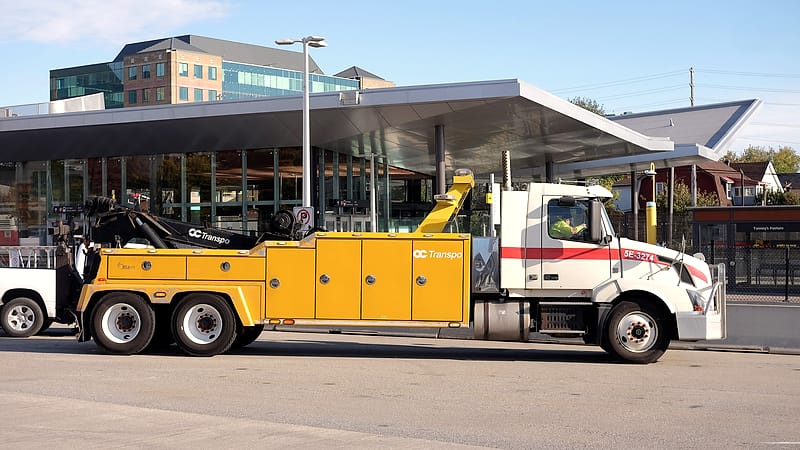
Getting a Towed Vehicle Back and Contesting the Charge
After a vehicle is stored, notice must be given to the registered and legal owners within a short statutory window, stating where the vehicle is, why it was removed and how to request a hearing. Release is generally required within a stated time of the request, the owner may inspect before accepting, and no waiver of damage claims may be required as a condition. A poststorage hearing determines whether reasonable grounds for the storage existed.

Titling an Abandoned Vehicle After a Lien Sale
Converting a possessory lien into a transferable title requires an application to the state vehicle agency, which supplies the registered owner and every recorded lienholder from the title record. Notice goes to each of them with a stated opportunity to pay or to oppose. Where no valid opposition is filed, the sale proceeds after publication and the buyer applies for a certificate of title supported by the lien sale documents.