Fare Enforcement, Citations and the Hearing That Follows
Most transit systems moved fare evasion out of criminal court and into an administrative process run by the agency itself. That changed the penalty, the proof and the deadline, and it created a hearing that many riders never learn exists.
The rule in short
Fare evasion was traditionally a criminal infraction. Many states now let a transit agency adopt an ordinance imposing an administrative penalty instead, enforced by designated inspectors on a proof-of-payment basis. The notice of violation sets a short period to pay or to request review, followed by an administrative hearing and, in most systems, a limited right of appeal to a court. Ignoring the notice usually escalates the amount and can send the debt to collection.
Two systems can charge the same fare and treat non-payment completely differently. On one, a rider without a valid fare commits a criminal infraction handled in traffic court. On the other, the same rider receives a notice of violation carrying a civil penalty, decided by a hearing officer employed by the agency. The difference comes from a state statute that permits the second approach, and from an ordinance the agency chose to adopt.
Proof of payment shifts the burden
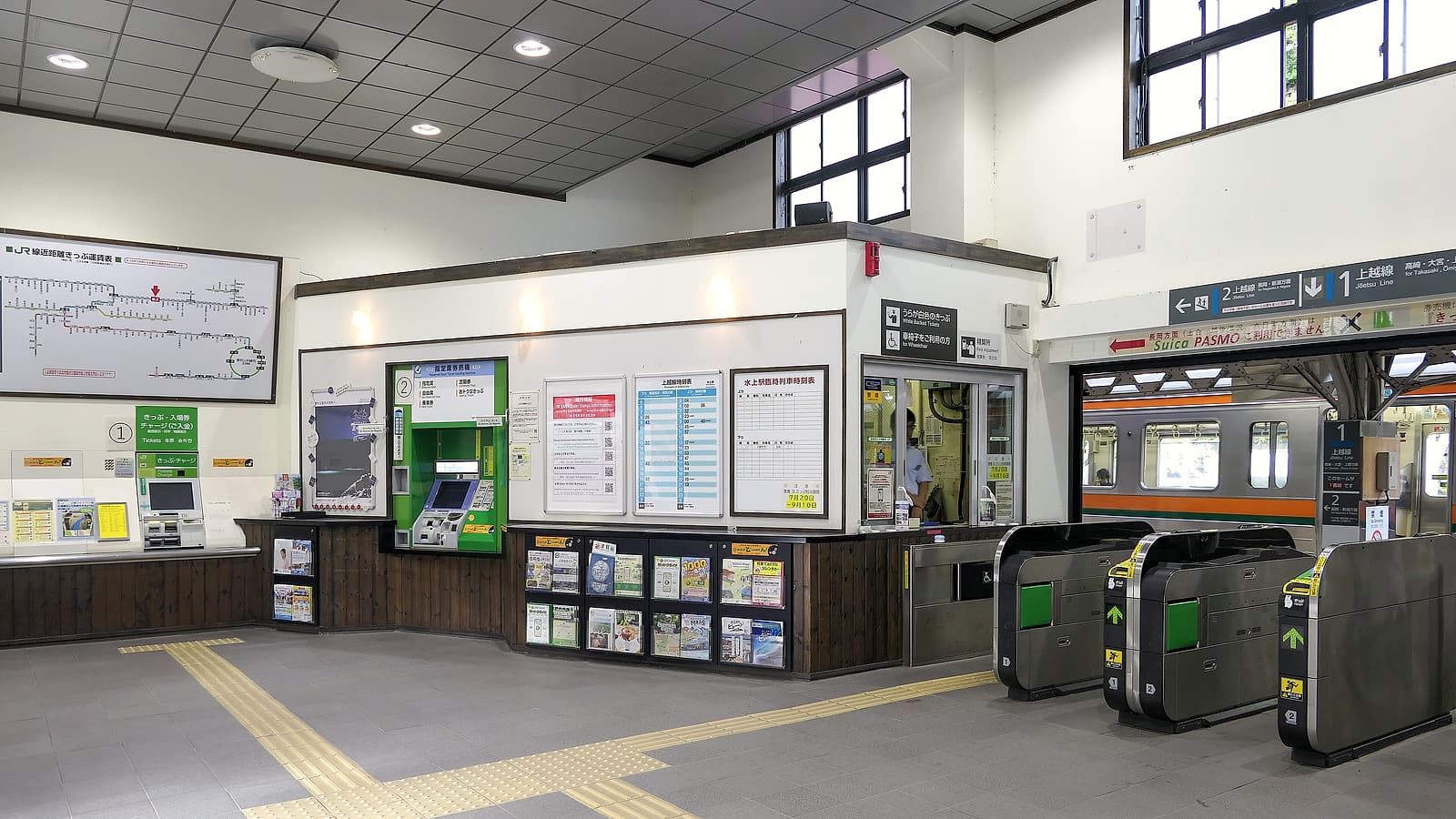
Barrier systems make payment a condition of entry. Proof-of-payment systems do the opposite: riders board freely and must be able to show a valid fare when an inspector asks. The legal consequence is that possession of the evidence sits with the rider. An inspector who finds no valid fare media has established the violation without proving intent.
That structure explains rules that otherwise look harsh. A pass that was purchased but left at home is not proof of payment. A transfer whose validity window has expired is not proof of payment. A mobile ticket that was purchased after the inspector approached is treated as no fare at all, because the timestamp shows the purchase followed the request.
How a crime became a civil penalty
State enabling statutes are what allow the change. A representative provision permits a public transportation agency to enact and enforce an ordinance imposing an administrative penalty for fare evasion and for a listed set of conduct violations, expressly in place of the criminal infraction. Another state authorizes an authority to set a schedule of fines by resolution, capped by reference to the lowest class of civil infraction, and to establish an alternative fare enforcement system that issues notices of violation and resolves them internally.
The conduct covered typically extends well past fare evasion: misuse of a transfer or pass, smoking, eating or drinking where prohibited, playing loud sound equipment, disturbing others by boisterous behavior, and carrying prohibited items. Riders are often surprised that a noise complaint arrives on the same form as a fare citation, but the statute treats them as one enforcement scheme.
Administrative penalty schemes give a short window, frequently measured in a few weeks, to pay or to request review. Missing it does not simply preserve the original amount. Most ordinances provide that the penalty increases on default, that late fees attach, and that the matter may be referred for collection. Because the notice is the only document that states the deadline, a rider who discards it usually has no way to learn what the window was.
| Feature | Criminal infraction route | Administrative penalty route |
|---|---|---|
| Who issues the citation | A peace officer | A designated fare inspector or officer |
| Where it is decided | A court, on the criminal calendar | An agency hearing officer |
| Standard of proof | Beyond a reasonable doubt | A preponderance of the evidence |
| Right to appointed counsel | Limited, and generally none for an infraction | None |
| Consequence of ignoring it | Failure to appear, with its own penalty | Increased penalty and referral to collection |
Who the inspector is and what the badge covers
Enabling statutes usually let an agency designate personnel to monitor fare payment and to issue notices of violation. Those designees are not always peace officers. Some systems use unarmed civilian inspectors, some use transit police, and some use both on the same platform with different powers.
The distinction matters for what can lawfully happen next. A civilian inspector's authority is the authority the statute and the ordinance grant, which typically covers requesting proof of payment, requesting identifying information sufficient to complete the notice, and directing a rider to leave the vehicle or the paid area. Arrest, search and detention beyond that are police functions.
Many agencies also publish limits on their own inspectors: how a rider may be approached, when an inspection may be conducted, what discretion exists to issue a warning instead of a notice, and how equity considerations are applied. Those internal policies are usually public records, and a departure from them is one of the few arguments that carries weight at an administrative hearing.
Contesting the notice in practice
Most schemes run in three stages. The first is an administrative review conducted on the papers, where the rider submits a written explanation and any documents. The second is an in-person or telephonic hearing before a hearing officer, usually available only after the review and sometimes conditioned on depositing the penalty amount. The third is a petition to a court, which in most systems reviews the record rather than hearing the matter afresh.
Useful evidence is narrow and specific. Transaction history from a registered card or mobile account, showing value loaded and a tap attempted at the right station and time, is the strongest item. A validator that was out of service can often be confirmed from the agency's own maintenance log, which is obtainable by request. Statements that the rider intended to pay carry almost no weight, because intent is not an element.
Riders with disabilities have an additional argument where the inspection or removal itself was carried out in a way that ignored accessibility obligations. That is a separate complaint route rather than a defense to the fare, and it goes to the agency's civil rights office and, if unresolved, to the federal transit authority.
Procedural defects are worth checking before substantive ones. The notice has to identify the rider, the location, the time and the provision violated, and it has to be served in the manner the ordinance prescribes. A notice mailed to an address the rider never gave, or one that cites a provision the agency never adopted, can fail on its own terms. Hearing officers dismiss on those grounds more readily than they weigh a rider's account against an inspector's.
Payment plans and community service alternatives exist in a growing number of systems, usually by ordinance and often tied to income. They are not advertised on the notice in every system, and asking for one during the administrative review stage is generally more effective than asking after a default has been entered and the penalty has escalated.
Removal, ejection and the line into other law
Statutes that authorize inspection generally also authorize removing a rider who cannot produce a fare and refuses to pay. Removal at the next stop, in a safe location, is the ordinary limit. Detention beyond the time needed to issue the notice, or removal into an unsafe setting, moves the matter out of fare enforcement and into a claim against the agency, which then runs through the notice of claim procedure described in the article on suing a transit authority.
Persistent non-payment is treated as trespass in some systems, and repeat offenders can be excluded from the property by written notice. That crosses into the ordinary law of unlawful presence on rail property, which is the subject of the article on the duty owed to a trespasser on the track. Where the dispute is about station or corridor property rather than about a rider, the ownership questions in the article on railroad rights of way are usually the ones that matter.
Points to carry away
- Proof-of-payment systems place the burden on the rider to produce a valid fare on demand.
- State law commonly allows an agency to convert fare evasion into a civil administrative penalty by ordinance.
- The notice of violation starts a short clock to pay, contest or request an administrative review.
- Administrative hearings use a lower standard of proof than a criminal court and are heard by the agency's hearing officer.
- Failure to respond generally increases the amount and can result in collection or a hold on agency services.
Questions readers ask
Can an inspector demand identification?
It depends on the enabling statute and the ordinance. Where fare evasion is a criminal infraction, an officer issuing a citation ordinarily may require identification because a citation substitutes for arrest. Where the violation is purely administrative, the inspector's authority is whatever the statute grants, which is often a power to request identifying information sufficient to issue the notice and to remove a rider who refuses to pay. Refusing to identify can convert an administrative matter into a police contact, which is usually the worse outcome.
Does a valid pass that failed to scan help?
It usually does, but the evidence has to be produced. Agencies can query the back-end record for a registered card or a mobile account and confirm that value was loaded and that a tap was attempted. That record is the strongest defense available at an administrative hearing. Riders using anonymous stored value cards have a harder time, since there is no account to look up. Photographing the card serial number and keeping the receipt for any value loaded is what makes the record retrievable later.
Does an unpaid transit penalty affect a driving record?
Generally no, because an administrative penalty is a civil debt of the agency rather than a traffic conviction. What it can affect is credit, if the agency refers the debt to a collection agency, and access to agency programs, since some systems condition discount fare eligibility or account reinstatement on clearing outstanding penalties. Where fare evasion remains a criminal infraction, an unpaid fine can become a failure to appear, which has consequences well beyond the original amount.
Sources
- California Public Utilities Code § 99580 — Administrative enforcement for fare evasion and prohibited conductAuthority for a transit agency to impose an administrative penalty by ordinance and the conduct it may cover.
- California Penal Code § 640 — Transit-related offensesThe criminal infraction scheme and the subdivision that permits administrative enforcement instead.
- RCW 81.112.210 — Fare payment; fines and penalties; fare enforcement systemAuthority to set a fine schedule by resolution and to create an alternative fare enforcement system with notices of violation.
- RCW 81.112.220 — Civil infractionsThe civil infractions an authority may establish in connection with fare payment and conduct.
- California Government Code § 911.2 — Time for presentation of claimsThe claim deadline that applies when a rider seeks damages from the agency rather than contesting a penalty.
- Federal Transit Administration — Americans with Disabilities ActAgency guidance on accessibility obligations that constrain how inspection and removal are carried out.
Metro Law Advisors is a publication, not a law firm. This article states general rules and cites its sources; it is not advice about any particular case, and the law differs by state and changes over time.
More in Rail & Transit

Railroad Rights of Way and What Happens When Service Ends
Rail corridors were assembled by purchase, condemnation and federal land grant, so the interests range from full ownership to a limited easement. When a railroad seeks to abandon a line, the Surface Transportation Board decides whether to authorize it. Before abandonment takes effect, a trail sponsor may seek interim trail use under the National Trails System Act, which railbanks the corridor: the easement does not terminate and reversion does not occur.
Trespassers on the Track and the Duty a Railroad Owes
Most states owe a trespasser only a duty to refrain from willful or wanton injury, which means a railroad is generally not liable for failing to anticipate someone on the track. The duty rises where the railroad knows people are regularly present at a location, where a crew discovers a person in peril and can still act, and in some states where a child is attracted to dangerous equipment. State statutes separately criminalize presence on the right of way and define its width.
Quiet Zones and the Rules on Sounding a Horn
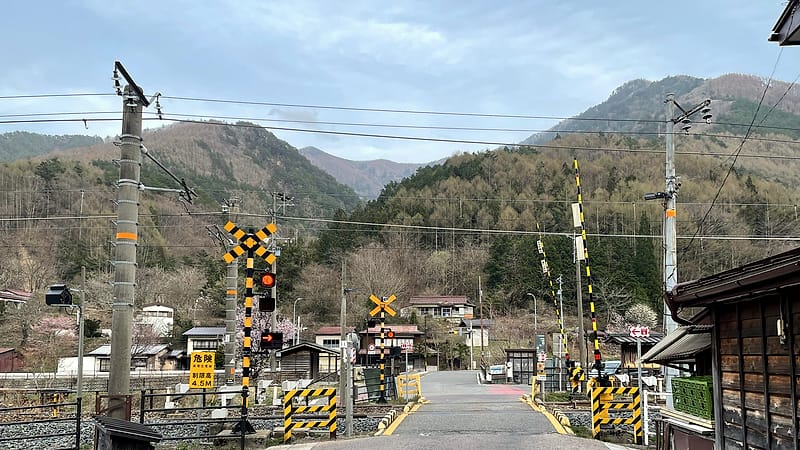
A federal rule requires the horn to be sounded in a prescribed pattern in advance of every public highway-rail grade crossing. A public authority may suspend that requirement by establishing a quiet zone, which requires every public crossing in the corridor to have flashing lights and gates, plus supplementary or alternative safety measures or a risk level below the threshold. Notice to the railroad and the state and federal agencies is required, and the zone can be terminated.