Railroad Rights of Way and What Happens When Service Ends
A rail line crosses land under one of two very different arrangements. It may be owned in fee, or it may be an easement that ends when railroad use does. Which one applies decides who owns the strip after abandonment, and railbanking can suspend the answer indefinitely.

The rule in short
Rail corridors were assembled by purchase, condemnation and federal land grant, so the interests range from full ownership to a limited easement. When a railroad seeks to abandon a line, the Surface Transportation Board decides whether to authorize it. Before abandonment takes effect, a trail sponsor may seek interim trail use under the National Trails System Act, which railbanks the corridor: the easement does not terminate and reversion does not occur.
A railroad running across a farm looks like a single arrangement and is at least four. The strip may be owned outright, held as an easement limited to railroad purposes, held under a federal land grant with its own reversionary rules, or occupied under a lease or license. When the trains stop, the difference between these becomes the whole question.
Fee, easement, and the instrument that decides
Corridors were assembled parcel by parcel, often in a hurry, using whatever instrument the landowner would sign. Some conveyances transferred a described strip in fee simple. Others granted a right of way over the land for railroad purposes, which most states read as an easement. Condemnation produced whatever interest the state statute authorized, and in many states that was an easement even where the railroad paid full value.
The consequences diverge completely. A fee owner may sell the strip, lease it for fiber optic conduit, or use it for anything lawful. An easement holder may use it only for the purposes the grant describes, and when railroad use ends the easement terminates and the burden lifts from the servient estate.
Courts read these instruments strictly, and the outcome frequently turns on a phrase. Language describing the purpose of the grant tends toward an easement; language describing the quantity of land conveyed tends toward a fee. Habendum clauses reciting that the land is conveyed so long as used for railroad purposes create a defeasible fee, which behaves like neither.
The railroad cannot simply walk away
Stopping service and abandoning a line are different acts. A rail carrier must obtain authority from the Surface Transportation Board before abandoning a line or discontinuing service over it, and the Board decides whether the present or future public convenience and necessity permit it. Until that authority issues and is consummated, the line remains part of the interstate rail system.
The proceeding is public. Shippers may object, and interested parties may file an offer of financial assistance to subsidize continued service or to purchase the line, which suspends the abandonment while the terms are set. Rail service continues while these processes run.
Because federal jurisdiction over rail transportation is exclusive, state and local governments cannot force a line out of service or condition its operation through zoning or nuisance rules. That exclusivity is the economic side of the doctrine described in the article on federal preemption of state rail safety rules.
Owners frequently assume that pulled rails and a vanished crossing prove the corridor is gone. They do not. A carrier may salvage material from a line it still holds authority over, and a line can sit unused for years without ever being abandoned in the legal sense. The date that matters is the date the Board's authority was consummated, and that is a matter of record in the agency docket rather than something visible from the property.
| Interest held | Typical origin | Effect when rail use ends |
|---|---|---|
| Fee simple in the strip | Purchase by deed conveying the land | Railroad keeps and may sell the strip |
| Easement for railroad purposes | Right of way grant or condemnation | Easement terminates and the burden lifts |
| Defeasible fee | Deed with a so long as used clause | Title reverts on the stated condition |
| Federal land grant right of way | Nineteenth century grant statutes | Governed by the grant statute and later federal acts |
| Railbanked corridor | Interim trail use under the Trails Act | No termination and no reversion while banked |
Reading an abandonment proceeding
The regulations set out two routes. A full application is used where the carrier cannot qualify for streamlined treatment, and it requires detailed evidence about revenues, costs and the effect on shippers. An exemption is the more common route for lines that have carried no traffic for a stated period, and it proceeds on a notice with a much shorter timetable.
Either way the docket produces a public record with the map, the milepost limits, the station list and the parties. Anyone with an interest can file, and the filings themselves define the deadlines that follow: the period for offers of financial assistance, the period for public use requests, and the period in which a trail use request must be made. Those windows are short and are not extended for parties who learn about the proceeding late.
Consummation is the step people miss. Authority to abandon is permission, not an event. The carrier files a notice of consummation, and until that is done the line remains subject to federal jurisdiction. Adjoining owners planning around a reversion should confirm consummation in the docket rather than infer it from the state of the track.
Railbanking suspends the answer
The National Trails System Act created a mechanism that changes the analysis entirely. If a trail sponsor is willing to assume full responsibility for management of the right of way, for any legal liability arising from it, and for the payment of taxes, and the railroad agrees to negotiate, the corridor may be transferred for interim trail use. Interim trail use is not abandonment. The corridor is railbanked, meaning it remains available for restoration of rail service.
The agency implements this by issuing a notice or certificate of interim trail use in the abandonment proceeding, which allows the railroad and the sponsor a negotiating period. The Board has extended the length of that initial period and provided for extensions where the parties agree. If negotiations fail, the abandonment proceeds on its original terms.
For adjoining owners the effect is stark. An easement that would have terminated on abandonment does not terminate, because abandonment never occurs. Owners who believed the strip would return to them instead find a public trail running through it, and any claim they have is a federal claim about the reservation of their reversionary interest rather than a challenge to the trail.
Living next to a corridor after service ends
Practical questions follow immediately. Who maintains fencing, who controls vegetation, who is responsible when someone is injured on the strip, and who may cross it. Under a trail arrangement those duties transfer to the sponsor by the terms of the interim trail use agreement, which is the document to obtain before assuming anything.
Crossings do not disappear on their own either. A grade crossing over a railbanked corridor may remain of record until it is formally removed, which is handled through the state process described in the article on closing or consolidating a crossing. Until then, the crossing remains in the inventory that drives funding decisions, as noted in the article on how warning devices are selected.
Presence on an active corridor is a separate matter with its own rules, and the duty owed to someone walking a line that still carries trains is narrow, as the article on the duty owed to a trespasser explains.
Points to carry away
- A corridor may be held in fee or as an easement, and the deed or grant that created it controls.
- An easement generally terminates on abandonment, and the strip merges into the adjoining land.
- Abandonment requires authority from the Surface Transportation Board rather than a decision by the railroad alone.
- Railbanking under the National Trails System Act prevents abandonment from taking effect and preserves the corridor.
- A railbanked corridor may be restored to rail service, which is why the interim trail user takes a qualified interest.
Questions readers ask
How can an owner find out which interest the railroad holds?
By tracing the chain of title for the strip itself rather than for the surrounding parcel. The recorded instrument that conveyed the corridor is the answer, and its language is decisive: a conveyance of a described strip in fee reads differently from a grant of a right of way for railroad purposes. County recorder indexes, the railroad's valuation maps and, for land grant lines, federal records are the usual sources. Because these instruments are often very old, a title examiner familiar with corridor conveyances is generally required.
Does a trail on the corridor become permanent?
Not in the legal sense. Railbanking preserves the corridor for possible restoration of rail service, and the trail sponsor's interim use is expressly subject to that possibility. In practice most railbanked corridors remain trails indefinitely, but the reservation is real: a carrier can seek to reactivate service, and the agency has processes for restoring a railbanked line. The trail sponsor also assumes responsibility for managing the corridor and for the taxes, liabilities and maintenance that come with it.
What is a corridor worth to an adjoining owner?
Where the railroad held only an easement and it terminates, the adjoining owner's fee is simply relieved of the burden, which can be significant for a strip running through the middle of a property. Where railbanking prevents termination, owners have argued that the continued burden is a taking of the reversionary interest, and claims of that kind are brought in the federal claims court rather than in the abandonment proceeding. Whether such a claim exists depends entirely on the underlying instrument.
Sources
- 49 U.S.C. § 10903 — Filing and procedure for application to abandon or discontinueThe requirement of Board authority before a line may be abandoned or service discontinued.
- 49 U.S.C. § 10501 — General jurisdictionThe exclusive federal jurisdiction over rail transportation, including construction and abandonment of lines.
- 16 U.S.C. § 1247 — State and local area recreation and historic trailsThe interim trail use and railbanking provision of the National Trails System Act.
- 49 CFR § 1152.29 — Prospective use of rights-of-way for interim trail use and rail bankingHow a trail sponsor requests interim trail use and what the resulting notice or certificate does.
- 49 CFR Part 1152 — Abandonment and discontinuance of rail linesThe abandonment application and exemption procedures, including notice and offers of financial assistance.
- Surface Transportation Board — DecisionsThe agency docket where abandonment and trail use decisions are issued and searchable.
- Surface Transportation Board — Railroad Map DepotAgency mapping resources showing abandoned and railbanked rail lines.
Metro Law Advisors is a publication, not a law firm. This article states general rules and cites its sources; it is not advice about any particular case, and the law differs by state and changes over time.
More in Rail & Transit
Trespassers on the Track and the Duty a Railroad Owes
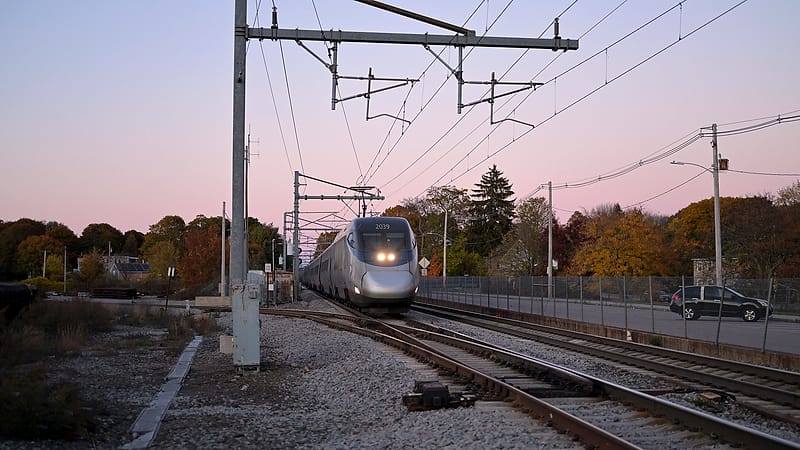
Most states owe a trespasser only a duty to refrain from willful or wanton injury, which means a railroad is generally not liable for failing to anticipate someone on the track. The duty rises where the railroad knows people are regularly present at a location, where a crew discovers a person in peril and can still act, and in some states where a child is attracted to dangerous equipment. State statutes separately criminalize presence on the right of way and define its width.
Fare Enforcement, Citations and the Hearing That Follows
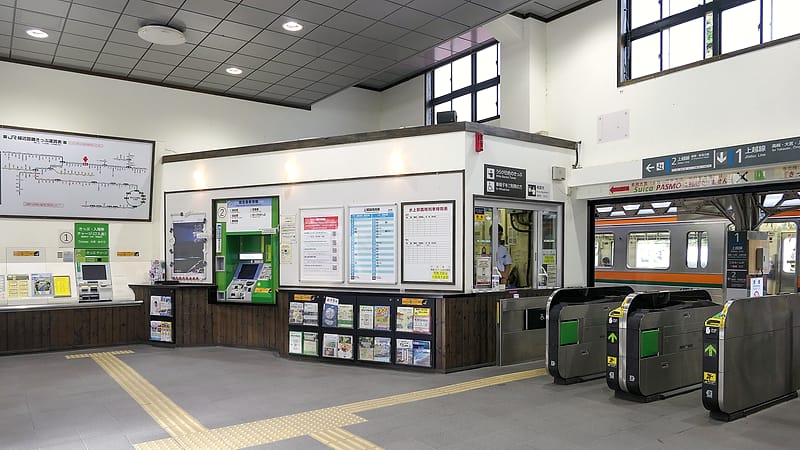
Fare evasion was traditionally a criminal infraction. Many states now let a transit agency adopt an ordinance imposing an administrative penalty instead, enforced by designated inspectors on a proof-of-payment basis. The notice of violation sets a short period to pay or to request review, followed by an administrative hearing and, in most systems, a limited right of appeal to a court. Ignoring the notice usually escalates the amount and can send the debt to collection.
Quiet Zones and the Rules on Sounding a Horn
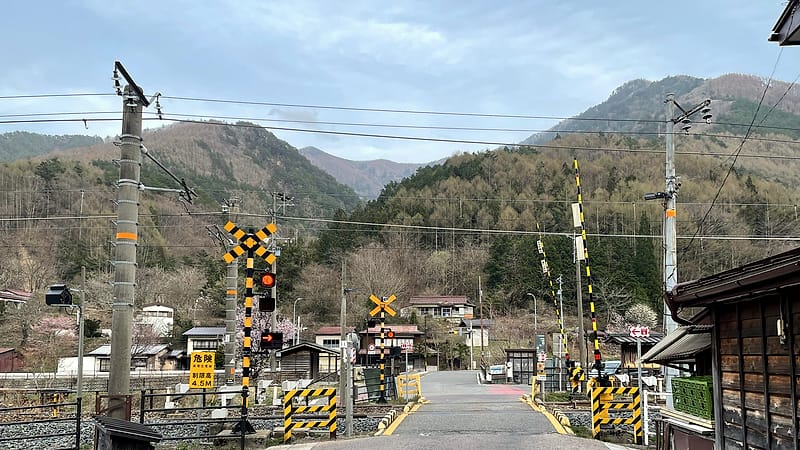
A federal rule requires the horn to be sounded in a prescribed pattern in advance of every public highway-rail grade crossing. A public authority may suspend that requirement by establishing a quiet zone, which requires every public crossing in the corridor to have flashing lights and gates, plus supplementary or alternative safety measures or a risk level below the threshold. Notice to the railroad and the state and federal agencies is required, and the zone can be terminated.