Quiet Zones and the Rules on Sounding a Horn
Locomotive horns sound at public crossings because a federal rule requires it, not because the railroad chooses to. A community that wants silence has to become the public authority for the corridor, add safety measures that offset the missing horn, and keep them working.
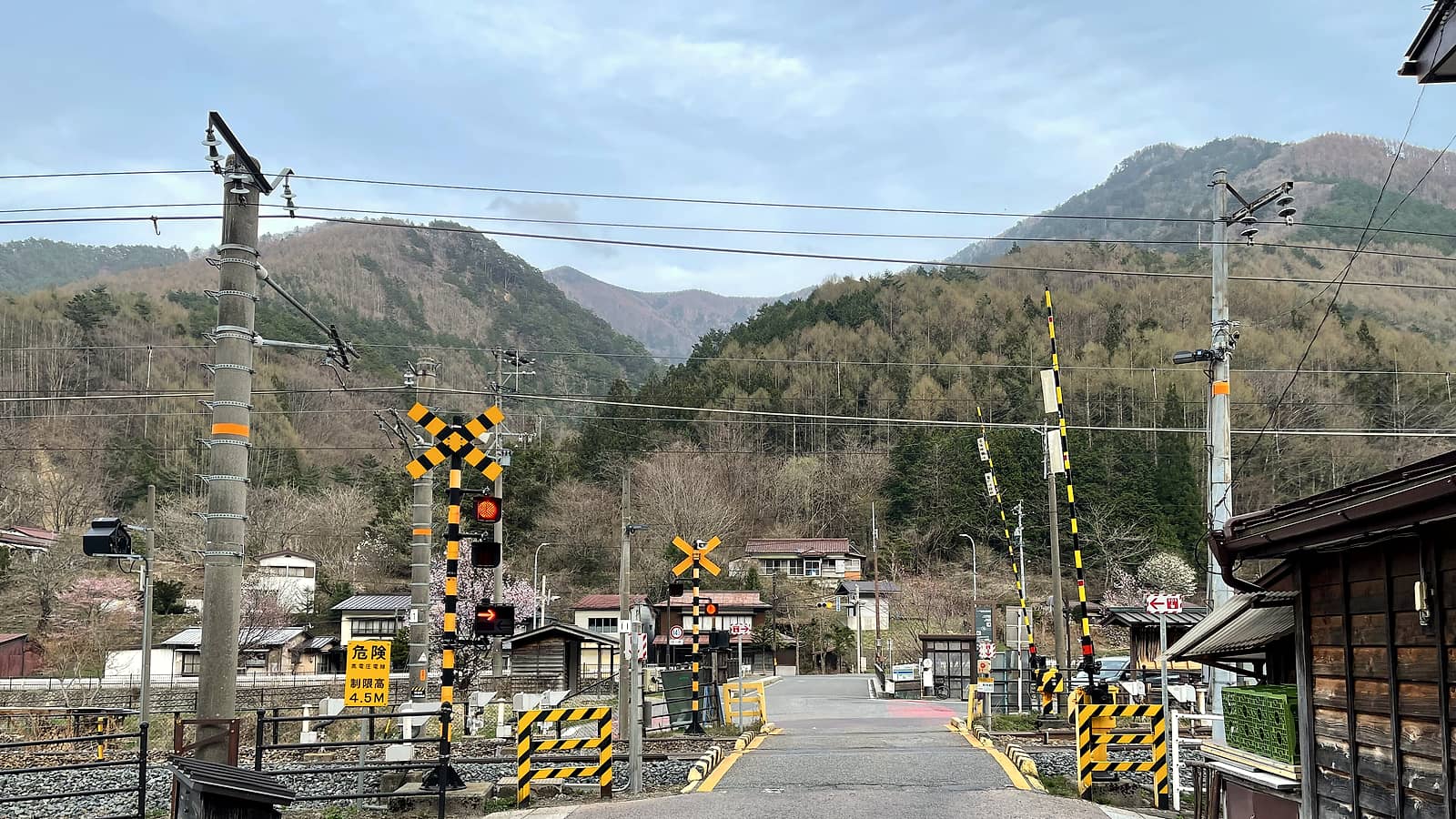
The rule in short
A federal rule requires the horn to be sounded in a prescribed pattern in advance of every public highway-rail grade crossing. A public authority may suspend that requirement by establishing a quiet zone, which requires every public crossing in the corridor to have flashing lights and gates, plus supplementary or alternative safety measures or a risk level below the threshold. Notice to the railroad and the state and federal agencies is required, and the zone can be terminated.
The complaint arrives at every city hall on a rail line: the trains blow their horns at three in the morning and something should be done. The something is defined precisely by federal regulation, and it does not involve asking the railroad. It involves the city becoming the public authority for a stretch of corridor and paying for engineering that makes the missing horn safe.
What the rule requires by default
The federal horn rule directs that the locomotive horn be sounded on approach to a public highway-rail grade crossing, in a prescribed pattern, beginning a set interval before the train reaches the crossing and continuing until the lead locomotive occupies it. The rule also fixes minimum and maximum sound levels for the horn itself.
Because this is a federal regulation covering the subject of audible warning at public crossings, a local ordinance forbidding horns is displaced. Communities that passed such ordinances found them unenforceable, which is the point examined in the article on federal preemption of state rail safety rules. The regulation supplies the only lawful route to silence.
The floor every quiet zone has to clear
A quiet zone must be at least one half mile long along the track. Every public highway-rail grade crossing within it must be equipped with active grade crossing warning devices comprising flashing lights and gates. A corridor with even one crossing left on crossbucks cannot qualify until that crossing is upgraded or closed.
Beyond that floor, the risk created by removing the horn has to be offset. There are three ways to do it. Supplementary safety measures are engineering treatments applied at individual crossings that reduce risk enough on their own: a four-quadrant gate system, gates with medians or channelization devices that prevent driving around, a one-way street with gates across the full width, or permanent closure of the crossing. Alternative safety measures are treatments that need federal approval because they do not fully substitute on their own. The third route is arithmetic: show that the corridor risk index, computed with the horn removed, already falls below the applicable threshold.
A wayside horn is a stationary horn mounted at the crossing that sounds toward the roadway rather than across the neighborhood. Installing one satisfies the audible warning requirement and can be used at a crossing instead of the locomotive horn, which reduces noise substantially for anyone not directly at the crossing. It is treated as a separate option under the rule rather than as a supplementary safety measure, and it does not by itself create a quiet zone.
| Route | What it involves | Federal approval needed |
|---|---|---|
| Public authority designation with supplementary measures | Engineering treatments at each crossing that reduce risk on their own | No, notice and certification only |
| Public authority designation on risk index | Showing the corridor risk with horns silenced is below the threshold | No, notice and certification only |
| Application for approval with alternative measures | Treatments that do not fully substitute, supported by analysis | Yes |
| Wayside horn at a crossing | A stationary horn directed at the roadway | Handled under its own provisions |
| Crossing closure | Removing the crossing from the corridor entirely | Handled through the state process |
Who counts as the public authority
The rule assigns the work to the public authority, meaning the entity responsible for traffic control or law enforcement at the crossings in question. That is usually a city or a county, and sometimes a state department of transportation. A neighborhood association, a developer or a group of residents cannot establish a quiet zone, and neither can the railroad.
Where a corridor runs through several jurisdictions, each is the public authority for its own crossings, and a corridor-wide zone requires either a joint effort or a single agency taking responsibility for the whole length. That coordination problem, rather than the engineering, is what stalls most multi-city proposals. It also determines who is on the hook afterwards, because the entity that certified the zone carries the maintenance and affirmation duties.
The half-mile minimum has a practical consequence for small towns. A single problem crossing cannot be quieted on its own; the zone has to span at least that distance, which typically pulls in neighboring crossings that were not part of the original complaint and have to be brought up to standard as well.
Notice, certification and the diagnostic review
Establishment is a paperwork sequence, and skipping a step voids the result. The public authority issues a notice of intent to the railroads operating over the crossings, the state agency responsible for highway and road safety, and the state agency responsible for grade crossing safety, inviting comment. A diagnostic team review is conducted for crossings where it is required.
Once the measures are installed, the public authority issues a notice of quiet zone establishment. That notice must include specified content, including a statement certifying that the required measures are in place and, where the risk index route is used, the data behind the calculation. Copies go to the railroads, the state agencies and the federal agency. The zone takes effect on the terms the rule specifies, and the railroad then ceases routine horn sounding.
Continuing obligations follow. The public authority has to keep the measures in working order and periodically affirm the zone, and updated data for the crossings must be reported so the inventory stays accurate, a duty that also affects funding decisions as described in the article on how warning devices are selected.
Losing the zone
Quiet zone status is not permanent. The rule sets out the conditions under which it is terminated, which include failure to maintain the supplementary or alternative safety measures, a rise in the risk index above the applicable threshold, and failure to provide the required periodic affirmations. Termination generally follows written notice and an opportunity to correct the problem.
The practical failure mode is mundane. A median gets removed during a repaving project, channelization posts are knocked down and not replaced, or a crossing is added to the corridor by a new development. Each of those can put the zone out of compliance without anyone at the city noticing, and residents learn about it when the horns come back.
Two adjacent questions come up constantly. Closing a crossing is often cheaper than equipping it, and it removes the crossing from both the risk calculation and the maintenance burden; that route is set out in the article on closing or consolidating a crossing. And where a collision occurs inside a quiet zone, the absence of a horn is not itself negligence, which changes the proof in the way described in the article on liability after a crossing collision.
Points to carry away
- The horn requirement applies to public highway-rail grade crossings and follows a prescribed pattern and timing.
- A quiet zone must be at least one half mile long and every public crossing in it needs flashing lights and gates.
- Risk is reduced either by supplementary safety measures at crossings or by showing the corridor risk falls below the threshold.
- Written notice of intent and a notice of establishment must go to the railroad, the state agency and the federal agency.
- Quiet zone status can be terminated when the required measures are not maintained or the risk rises.
Questions readers ask
Does a quiet zone stop the horn completely?
No. The rule suspends the routine sounding of the horn on approach to crossings within the zone. Engineers may still sound the horn in an emergency, to comply with other federal regulations or railroad operating rules, and to warn people, animals or vehicles on or near the track. Horns are also used during switching, when passing maintenance crews and where a specific operating rule requires it. Residents who expect complete silence and hear a horn are usually hearing a use the rule never suspended.
Who pays for the measures a quiet zone requires?
The public authority that establishes the zone, which in practice means the city, county or state agency with jurisdiction over the roadways. Federal crossing funds can sometimes be used where the improvement also reduces risk on its own terms, but the horn suspension itself is not a federally funded purpose. Costs include gates and lights at any crossing lacking them, medians or channelization devices, engineering studies, and the ongoing maintenance that keeps the measures effective.
Can a private crossing be included?
Private crossings within the limits of a proposed quiet zone must be addressed, and the rule sets out how they are treated depending on whether they carry public traffic and whether they have an existing warning device. Pedestrian crossings within the zone must also be handled. The practical effect is that a corridor with several farm or industrial crossings is significantly harder to convert, because each one has to be evaluated and often improved or closed before the zone can be certified.
Sources
- 49 CFR Part 222 — Use of Locomotive Horns at Public Highway-Rail Grade CrossingsThe federal horn requirement and the complete quiet zone framework.
- 49 CFR § 222.35 — Minimum requirements for quiet zonesLength, warning device and risk reduction requirements a corridor must satisfy.
- 49 CFR § 222.39 — How is a quiet zone establishedThe public authority designation route and the risk-based approval route.
- 49 CFR § 222.43 — Notices required to create or continue a quiet zoneWho must receive the notice of intent and the notice of establishment, and what each must contain.
- 49 CFR § 222.51 — Conditions under which quiet zone status will be terminatedThe grounds and process for losing quiet zone status.
- FRA — Train Horns and Quiet ZonesThe agency's own description of the horn rule and the quiet zone process.
- FRA — Locomotive Horn Sounding and Quiet Zone EstablishmentThe agency fact sheet summarizing sounding requirements and establishment options.
Metro Law Advisors is a publication, not a law firm. This article states general rules and cites its sources; it is not advice about any particular case, and the law differs by state and changes over time.
More in Rail & Transit

Railroad Rights of Way and What Happens When Service Ends
Rail corridors were assembled by purchase, condemnation and federal land grant, so the interests range from full ownership to a limited easement. When a railroad seeks to abandon a line, the Surface Transportation Board decides whether to authorize it. Before abandonment takes effect, a trail sponsor may seek interim trail use under the National Trails System Act, which railbanks the corridor: the easement does not terminate and reversion does not occur.
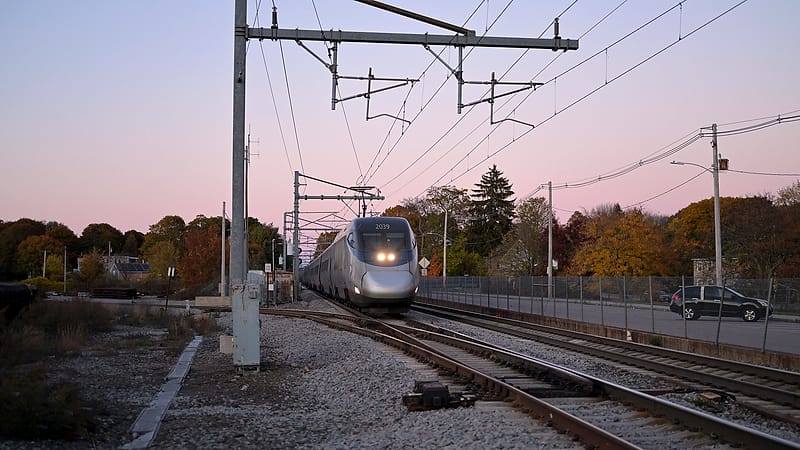
Trespassers on the Track and the Duty a Railroad Owes
Most states owe a trespasser only a duty to refrain from willful or wanton injury, which means a railroad is generally not liable for failing to anticipate someone on the track. The duty rises where the railroad knows people are regularly present at a location, where a crew discovers a person in peril and can still act, and in some states where a child is attracted to dangerous equipment. State statutes separately criminalize presence on the right of way and define its width.
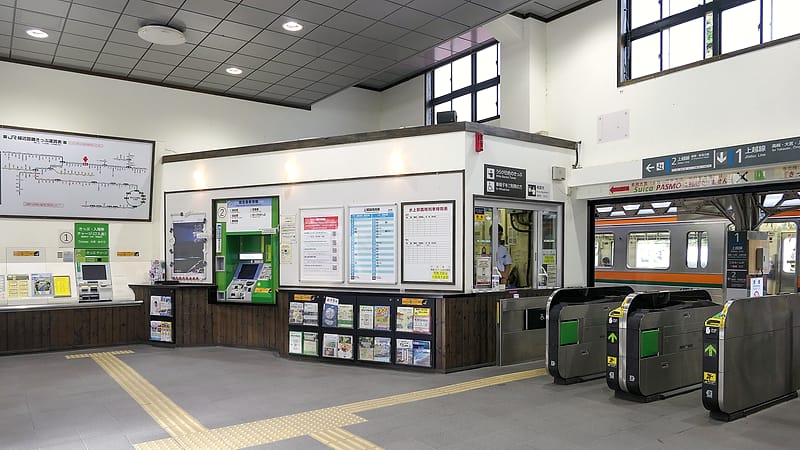
Fare Enforcement, Citations and the Hearing That Follows
Fare evasion was traditionally a criminal infraction. Many states now let a transit agency adopt an ordinance imposing an administrative penalty instead, enforced by designated inspectors on a proof-of-payment basis. The notice of violation sets a short period to pay or to request review, followed by an administrative hearing and, in most systems, a limited right of appeal to a court. Ignoring the notice usually escalates the amount and can send the debt to collection.