Safety Appliance Duties and Liability Without Fault
Two federal equipment statutes impose duties that do not bend to reasonable care. If a coupler fails to couple on impact or a locomotive part is not in safe condition to operate, the railroad answers for the resulting injury whether or not it did anything careless.
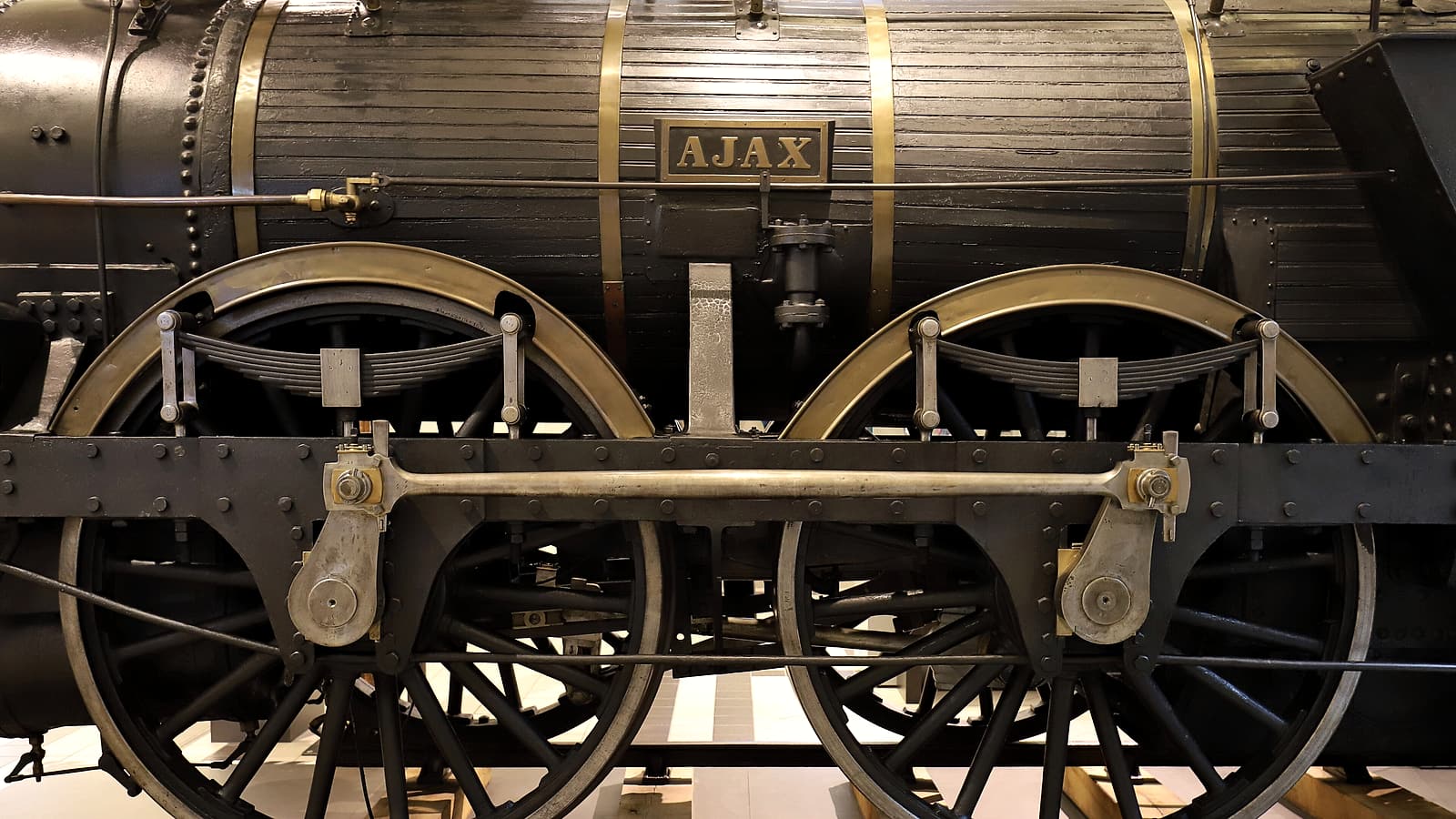
The rule in short
Federal law forbids a railroad from using a vehicle that lacks working couplers, handbrakes, sill steps, ladders and running boards, and forbids using a locomotive whose parts are not in proper condition and safe to operate. These duties are absolute rather than standards of care. When a violation contributes to an employee's injury, negligence need not be proved, assumption of risk does not apply, and damages are not reduced for the employee's own carelessness.
Most safety rules ask whether a company behaved reasonably. The federal railroad equipment statutes do not. They state that a railroad may not use a vehicle unless certain appliances are present and working, and may not use a locomotive unless its parts are in proper condition and safe to operate. There is no clause about reasonable care, and courts have read that omission literally for more than a century.
The appliances the statute names
The requirement list is specific. Vehicles must have couplers that couple automatically by impact and can be uncoupled without an individual going between the ends of the vehicles. They must have secure sill steps and efficient handbrakes, and where the vehicle has ladders and running boards, secure ladders and running boards with handholds at the top of each ladder.
Trains must have a specified proportion of vehicles with power or train brakes operated by the engineer. The regulations then translate these into measurements: where a step must sit, how far a handhold must extend, what clearance is required behind a grab iron. A vehicle that fails the measurement is in violation even if nobody has ever been hurt on it.
The word that decides most disputes is efficient. A handbrake that will not hold the car, or a coupler that will not couple on impact and requires a crew member to step between the cars, is inefficient in the statutory sense. Proof that the device worked before and after the incident does not answer the claim; the question is whether it worked at the moment of use.
The locomotive standard is broader
The locomotive statute reaches further than a list. It permits use only when the locomotive and its parts and appurtenances are in proper condition and safe to operate without unnecessary danger of personal injury, and have been inspected as required. Courts have applied it to seats, steps, windshields, walkways, heaters and anything else that is part of the locomotive as used.
Detailed regulations fill in the standard with inspection intervals, condemning limits and defect criteria. A locomotive found with a defect that the rules classify as condemnable may not remain in service, and using it anyway is a violation whatever the operating pressures were.
Because the standard is written in terms of safe operation rather than a component list, the argument in a locomotive case is usually about scope. Is a defective step part of the locomotive as used? A cracked windshield? A cab heater that leaves a crew working in freezing conditions? Courts have generally answered yes where the item is attached to the locomotive and used in its operation, and no where the complaint is really about a work practice that happens to occur on board.
Neither equipment statute gives an injured person a right to sue on its own. The claim is brought under the railroad employee injury statute, and the equipment violation is what removes the negligence element from it. Pleading a bare equipment count without the underlying employee injury claim invites a motion to dismiss, and the fix is not always available once the three-year deadline has run.
| Element | Ordinary negligence count | Equipment statute count |
|---|---|---|
| What must be shown | A failure of reasonable care | That the appliance or part failed in use |
| Effect of a good maintenance record | Strong defense evidence | No defense |
| Assumption of risk | Abolished by statute | Expressly inapplicable |
| Employee's own carelessness | Reduces damages proportionally | No reduction at all |
| Causation standard | Any part in producing the injury | Any part in producing the injury |
The limits of the equipment duties
The appliance requirements attach to vehicles used on a railroad line. The statute itself carves out categories, and the regulations describe which standards apply to which class of equipment, so a piece of on-track maintenance machinery is not necessarily governed by the same list as a freight car. Arguing that a hi-rail truck lacked a compliant sill step invites a fight about coverage rather than about the defect.
Timing matters as much as coverage. The duty is triggered by use. Equipment standing in a repair track designated for that purpose, or being moved for repair under the movement-for-repair allowance in the rules, occupies a different position from equipment placed in a train and hauled in service. The railroad's first response to an appliance claim is very often that the car was properly bad-ordered and being moved for repair.
Finally, the statutes govern condition, not design. A claim that a coupler of a different type would have been safer, or that a locomotive cab should have been laid out differently, is a design argument. Those are the claims most likely to be displaced entirely, because equipment is the area where federal regulation is at its most complete.
Why the damages rule changes the settlement
In a negligence case a jury that finds the employee forty percent responsible reduces the award by that share. Where a safety statute violation contributed to the injury, no reduction is permitted at all. The employee's own carelessness becomes legally irrelevant to the amount.
That single rule is often worth more than the liability finding. It explains why the equipment theory is pleaded whenever an appliance or locomotive part was involved, and why railroads litigate the existence of a defect so hard. The broader framework of the employee remedy, including the deadline and the choice of forum, is set out in the article on the railroad worker injury statute.
Building the record before the equipment moves
Equipment claims are won with identifiers. The car initials and number, the locomotive number, the track and the time are the keys that unlock the shop history, the bad order reports, the inspection records and the event recorder download. Without them the railroad's response to a document request is a genuine inability to locate the equipment.
Crew statements are the second pillar. How many coupling attempts were made, whether anyone went between the cars, whether the handbrake wheel spun freely, whether the locomotive seat was already reported: these are details that fade within weeks and are rarely captured in an injury report form.
State inspectors and federal inspectors both write reports on equipment defects, and those reports are ordinarily obtainable. They sit outside the evidence restrictions that limit the use of crossing hazard studies in a crossing collision case. Where a defect claim also involves an argument that a state rule should have required something more, the displacement analysis in the article on federal preemption of state rail safety rules applies with unusual force, because equipment is the subject the federal government occupies most completely.
Points to carry away
- The equipment statutes impose an absolute duty rather than a duty of reasonable care.
- A coupler that fails to couple automatically on impact is a violation regardless of maintenance history.
- A locomotive may not be used unless its parts and appurtenances are in proper condition and safe to operate.
- Where a safety statute violation contributes to the injury, damages are not reduced for the employee's own negligence.
- The statutes create the duty; the injury claim itself is brought under the railroad employee injury statute.
Questions readers ask
Does a defect help someone who is not a railroad employee?
Indirectly. The equipment statutes were written to protect employees, and the no-fault effect and the bar on reducing damages operate inside the employee injury statute. A member of the public injured by a runaway car or a failed handbrake still relies on ordinary negligence, but a proven statutory violation is powerful evidence in that case as well. Many states treat violation of a safety statute as negligence per se, which functionally supplies the standard of care and shifts the argument to causation.
What if the equipment was inspected and passed?
A clean inspection is no defense to an appliance claim. The duty attaches to the condition of the equipment at the time of use, not to the diligence of the inspection program. That is what makes the theory attractive: the railroad cannot answer with records showing that it followed its schedule. Inspection records still matter, but they go to whether a defect existed and when, and sometimes to a separate negligence theory about the inspection itself.
How is a coupler failure proved after the cars are moved?
Usually through testimony plus the mechanical record. Crew members describe how many attempts were required to couple and whether they had to go between the cars to adjust the knuckle. The repair record for the car, the bad order report and the shop history are then requested. Because cars move quickly through the system, the car initials and number should be recorded at the scene. Without that identifier the shop record cannot be traced, and the claim usually collapses into a general maintenance allegation.
Sources
- 49 U.S.C. § 20302 — General requirementsThe appliance requirements, including automatic couplers, secure handbrakes, sill steps, ladders and running boards.
- 49 U.S.C. § 20301 — Definition and nonapplicationWhich vehicles the safety appliance requirements reach and which are excluded.
- 49 U.S.C. § 20304 — Assumption of risk by employeesAn employee injured by a violation is not deemed to have assumed the risk.
- 49 U.S.C. § 20701 — Requirements for useA locomotive may be used only when its parts are in proper condition and safe to operate.
- 45 U.S.C. § 53 — Contributory negligence; diminution of damagesNo reduction of damages where a safety statute violation contributed to the injury.
- 49 CFR Part 231 — Railroad Safety Appliance StandardsThe dimensional and placement standards for appliances on each class of equipment.
- 49 CFR Part 229 — Railroad Locomotive Safety StandardsInspection intervals, condemning limits and the conditions that make a locomotive unfit for service.
Metro Law Advisors is a publication, not a law firm. This article states general rules and cites its sources; it is not advice about any particular case, and the law differs by state and changes over time.
More in Rail & Transit
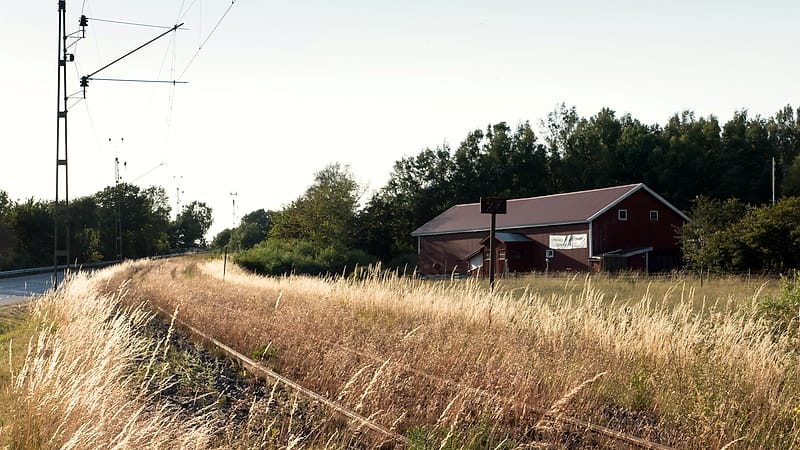
Railroad Rights of Way and What Happens When Service Ends
Rail corridors were assembled by purchase, condemnation and federal land grant, so the interests range from full ownership to a limited easement. When a railroad seeks to abandon a line, the Surface Transportation Board decides whether to authorize it. Before abandonment takes effect, a trail sponsor may seek interim trail use under the National Trails System Act, which railbanks the corridor: the easement does not terminate and reversion does not occur.
Trespassers on the Track and the Duty a Railroad Owes
Most states owe a trespasser only a duty to refrain from willful or wanton injury, which means a railroad is generally not liable for failing to anticipate someone on the track. The duty rises where the railroad knows people are regularly present at a location, where a crew discovers a person in peril and can still act, and in some states where a child is attracted to dangerous equipment. State statutes separately criminalize presence on the right of way and define its width.
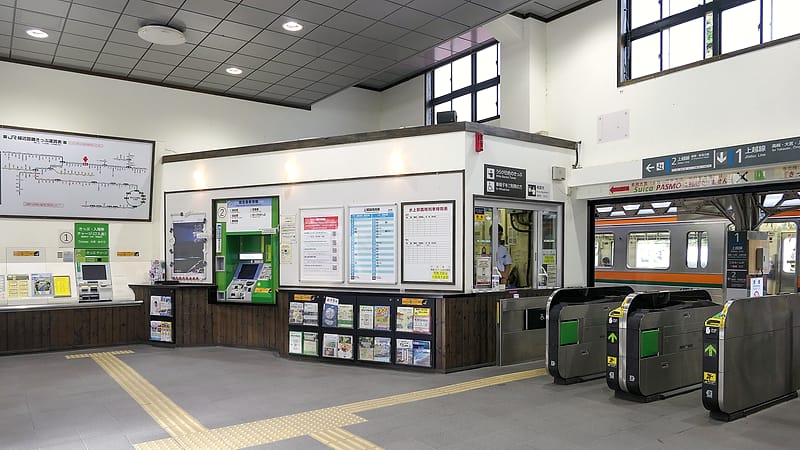
Fare Enforcement, Citations and the Hearing That Follows
Fare evasion was traditionally a criminal infraction. Many states now let a transit agency adopt an ordinance imposing an administrative penalty instead, enforced by designated inspectors on a proof-of-payment basis. The notice of violation sets a short period to pay or to request review, followed by an administrative hearing and, in most systems, a limited right of appeal to a court. Ignoring the notice usually escalates the amount and can send the debt to collection.