Liability After a Grade Crossing Collision
A crossing collision produces three possible defendants and a short list of theories that actually survive. Knowing which duty belongs to whom, and which records are shielded from discovery, decides the case long before a jury hears it.
The rule in short
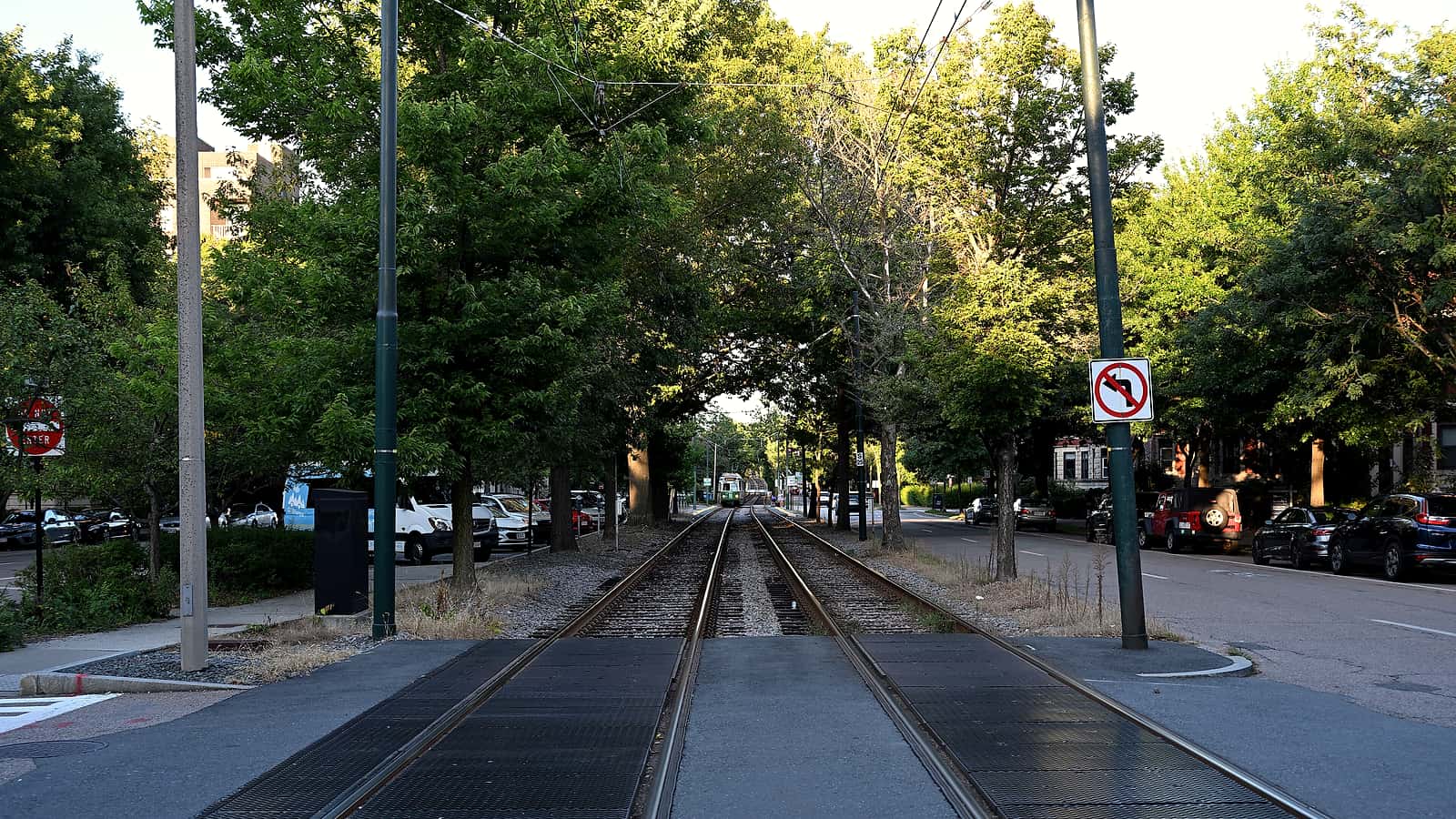
A crossing case is built from separate duties. The railroad answers for train operation, sight lines on its right of way and the maintenance of any active warning system. The road authority answers for the roadway approach and the signs it owns. The driver owes a duty to look and listen. Federal law displaces some theories outright, and a federal evidence statute bars using state crossing surveys and hazard reports against the agency that compiled them.
A collision at a crossing looks like one event and is legally three. The train was operated by a railroad, the road was built and signed by a public authority, and the vehicle was driven by someone who owed a duty to look. Sorting the case means assigning each alleged failure to whichever of the three owed that particular duty, then testing whether federal law leaves the theory standing.
The railroad's share of the duty
A railroad owes a duty of ordinary care in the operation of its trains: a proper lookout, a timely response to a hazard the crew can see, and the audible warning federal rules require on approach. It also owes duties tied to its own property, including keeping vegetation, stored cars and equipment from obscuring the view across the right of way.
Where an active warning system exists, the railroad maintains it. Federal rules set inspection and testing intervals and require a specific response when the system is reported to be failing, including flagging or other interim protection until repairs are made. A false activation, where the lights and gates operate with no train approaching, carries its own response duty, because drivers who learn to distrust a signal are the ones who go around it.
What the railroad generally does not owe is a duty to have installed a better device. That decision belongs to the highway agency and, where federal money paid for it, is usually settled as described in the article on how a warning device is selected and funded.
Sorting the surviving theories
Federal track standards fix a maximum speed for each class of track. A claim that the train was going too fast for conditions, where the speed was within the class limit, is displaced. A claim that the crew saw a stalled vehicle and did not brake is a different allegation and survives, because no federal rule prescribes the response to a specific hazard.
Maintenance claims survive but change shape. Rather than arguing that a reasonable railroad would have tested the circuit more often, the claim becomes an allegation that the railroad failed to comply with the federal standard of care in the grade crossing rules, or failed to follow its own plan created under those rules. The statute expressly preserves both. The full mechanics appear in the article on federal preemption of state rail safety rules.
Warning time is the technical question that decides many signal cases. Federal rules require a minimum period of activation before the train arrives, and the circuit is designed around an assumed approach speed. A slow-moving train, a train that stops and restarts within the approach circuit, or a second train on an adjacent track can produce a warning that is technically compliant and practically misleading. Establishing what the circuit did requires the signal event log rather than testimony.
Horn evidence is similarly documentary. The event recorder records horn activation against distance from the crossing, and federal rules prescribe the pattern and the window in which it must begin. Where the crossing sits inside a quiet zone the analysis inverts, and the absence of a horn proves nothing at all, as explained in the article on quiet zones and the horn requirement.
Federal law bars the discovery and the admission into evidence of reports, surveys, schedules and lists compiled or collected for the purpose of identifying hazardous crossing locations under the federal-aid safety programs, in any action for damages arising at a location mentioned in them. The point was to stop states from being punished for studying their own crossings. The practical effect is that the very document a plaintiff most wants, the state's ranked list showing the crossing was known to be dangerous, is usually unusable. Ordinary maintenance records, inventory data and the railroad's own files are not covered.
| Alleged failure | Who owes the duty | Status of the theory |
|---|---|---|
| Train exceeded the class speed limit | Railroad | Survives as a federal standard of care claim |
| Train too fast for conditions within the limit | Railroad | Displaced |
| No horn or a late horn on approach | Railroad | Survives, unless a quiet zone applies |
| Brush and stored cars blocked the sight line | Railroad, and road authority on its right of way | Ordinary state law duty |
| Rough or humped roadway approach | Road authority | Ordinary duty, subject to the claim notice deadline |
| Crossing needed gates rather than lights | Highway agency | Usually settled by the federal approval record |
What the driver is presumed to have owed
Every state imposes a duty on a driver approaching a crossing to look and listen, and most impose a statutory duty to stop when a signal is operating, when a train is plainly visible, or when a flagger directs it. Certain vehicles, including school buses and vehicles carrying hazardous materials, must stop at every crossing regardless of the warning device.
Courts treat a failure to look as negligence, and in some states a driver who could have seen the train from a point where a stop was still possible is barred from arguing that the crossing was inadequate. The presumption erodes where the view was obstructed, where the active warning system failed, or where the roadway approach made a controlled stop impossible.
Going around a lowered gate is the hardest fact for a claimant. It is a traffic violation in every state and it is often the fact a jury remembers. Cases involving that conduct usually turn on a history of false activations at the same crossing, which is why the railroad's malfunction log for the preceding period is worth requesting even when the collision itself involved no malfunction.
Suing the road authority is a different exercise
The roadway approach, the advance warning signs, the pavement markings and the geometry that determines whether a truck can clear the track belong to the public road authority. Claims against that authority run through the state claims act, which imposes a short written notice deadline, damages caps in many states, and an immunity for discretionary design choices.
Because those deadlines are measured in months rather than years, the public entity claim is the one most often lost by delay. The same structure governs claims against a transit operator, and the sequence is set out in the article on suing a transit authority.
The evidence that disappears first
Physical evidence at a crossing changes within days. Vegetation is cut, gates are repaired, and the signal system is tested and reset. Locomotive event recorder data, forward-facing video and signal event logs are retained under retention schedules that are often measured in weeks.
A preservation letter sent immediately, naming the locomotive, the crossing, the date of loss and the specific data systems, is the single most useful step available to a claimant. Photographs of each approach quadrant taken from a driver's eye height, before any maintenance occurs, are the second. Where the collision involved a pedestrian rather than a vehicle, the duty analysis shifts to the rules described in the article on the duty owed to a trespasser on the track.
None of this changes the underlying arithmetic. Most crossing cases are comparative fault cases, and the recovery is a fraction determined by how much of the failure the jury assigns to the driver. The theories that survive preemption are what set the railroad's share, and the records requested in the first month are what prove them.
Points to carry away
- Theories about permitted train speed on compliant track are generally displaced by federal track standards.
- A claim that the crew failed to react to a specific hazard is not a speed claim and normally survives.
- Federal law shields state crossing surveys and hazard reports from discovery and from admission into evidence.
- Failure to maintain, inspect or test an active warning system is pleaded as a federal standard of care claim.
- Vegetation and stored equipment blocking sight lines on the right of way remain an ordinary state law duty.
Questions readers ask
How long is there to file a crossing claim?
The ordinary state personal injury limitation applies to the railroad, and in most states that is two or three years from the collision. The road authority is different: a claim against a public entity usually requires a written notice of claim filed within a few months, and the lawsuit deadline is shorter than the general rule. Missing the notice normally ends the claim against that defendant even though the case against the railroad is still alive, so the public entity deadline should be identified in the first week.
Does the event recorder settle what happened?
It settles part of it. The locomotive event recorder captures speed, throttle position, brake application and horn and bell operation on a time base, so the horn sequence and the point of emergency braking are usually not seriously disputed once it is produced. What it does not capture is what the crew could see, when the gates began to descend, or how the roadway approach looked. Signal system event logs, the crossing circuit records and forward-facing video have to be requested separately and are often overwritten quickly.
Is the driver always partly at fault?
Not always, but the presumption is strong. Most states hold that a driver must look and listen before entering a crossing and treat a failure to do so as negligence. That presumption weakens where the sight line was obstructed, where the active warning system malfunctioned, or where the roadway geometry made a stop impossible. In a comparative fault state the effect is to reduce recovery by the driver's share; in the few states retaining harsher rules, a substantial share can defeat the claim entirely.
Sources
- 49 U.S.C. § 20106 — PreemptionThe uniformity rule and the clause preserving claims that a railroad broke a federal standard or its own required plan.
- 23 U.S.C. § 407 — Discovery and admission as evidence of certain reports and surveysThe federal bar on discovering or admitting crossing hazard surveys and related safety reports.
- 49 CFR Part 234 — Grade Crossing SafetyInspection, testing and malfunction response duties for an active warning system.
- 49 CFR § 234.107 — False activationWhat a railroad must do once it learns a warning system is activating when no train is approaching.
- 49 CFR Part 213 — Track Safety StandardsThe track classes that fix maximum operating speed and displace a general excessive speed theory.
- 23 CFR § 646.214 — DesignThe federal design conditions behind the choice of warning device at a federally funded crossing.
Metro Law Advisors is a publication, not a law firm. This article states general rules and cites its sources; it is not advice about any particular case, and the law differs by state and changes over time.
More in Rail & Transit
Railroad Rights of Way and What Happens When Service Ends
Rail corridors were assembled by purchase, condemnation and federal land grant, so the interests range from full ownership to a limited easement. When a railroad seeks to abandon a line, the Surface Transportation Board decides whether to authorize it. Before abandonment takes effect, a trail sponsor may seek interim trail use under the National Trails System Act, which railbanks the corridor: the easement does not terminate and reversion does not occur.
Trespassers on the Track and the Duty a Railroad Owes
Most states owe a trespasser only a duty to refrain from willful or wanton injury, which means a railroad is generally not liable for failing to anticipate someone on the track. The duty rises where the railroad knows people are regularly present at a location, where a crew discovers a person in peril and can still act, and in some states where a child is attracted to dangerous equipment. State statutes separately criminalize presence on the right of way and define its width.
Fare Enforcement, Citations and the Hearing That Follows
Fare evasion was traditionally a criminal infraction. Many states now let a transit agency adopt an ordinance imposing an administrative penalty instead, enforced by designated inspectors on a proof-of-payment basis. The notice of violation sets a short period to pay or to request review, followed by an administrative hearing and, in most systems, a limited right of appeal to a court. Ignoring the notice usually escalates the amount and can send the debt to collection.