Closing or Consolidating a Grade Crossing
Closing a crossing removes a hazard, a maintenance bill and a horn. It also removes a route someone relies on, which is why the decision usually belongs to a state commission and comes with notice, a hearing and an apportionment of cost.
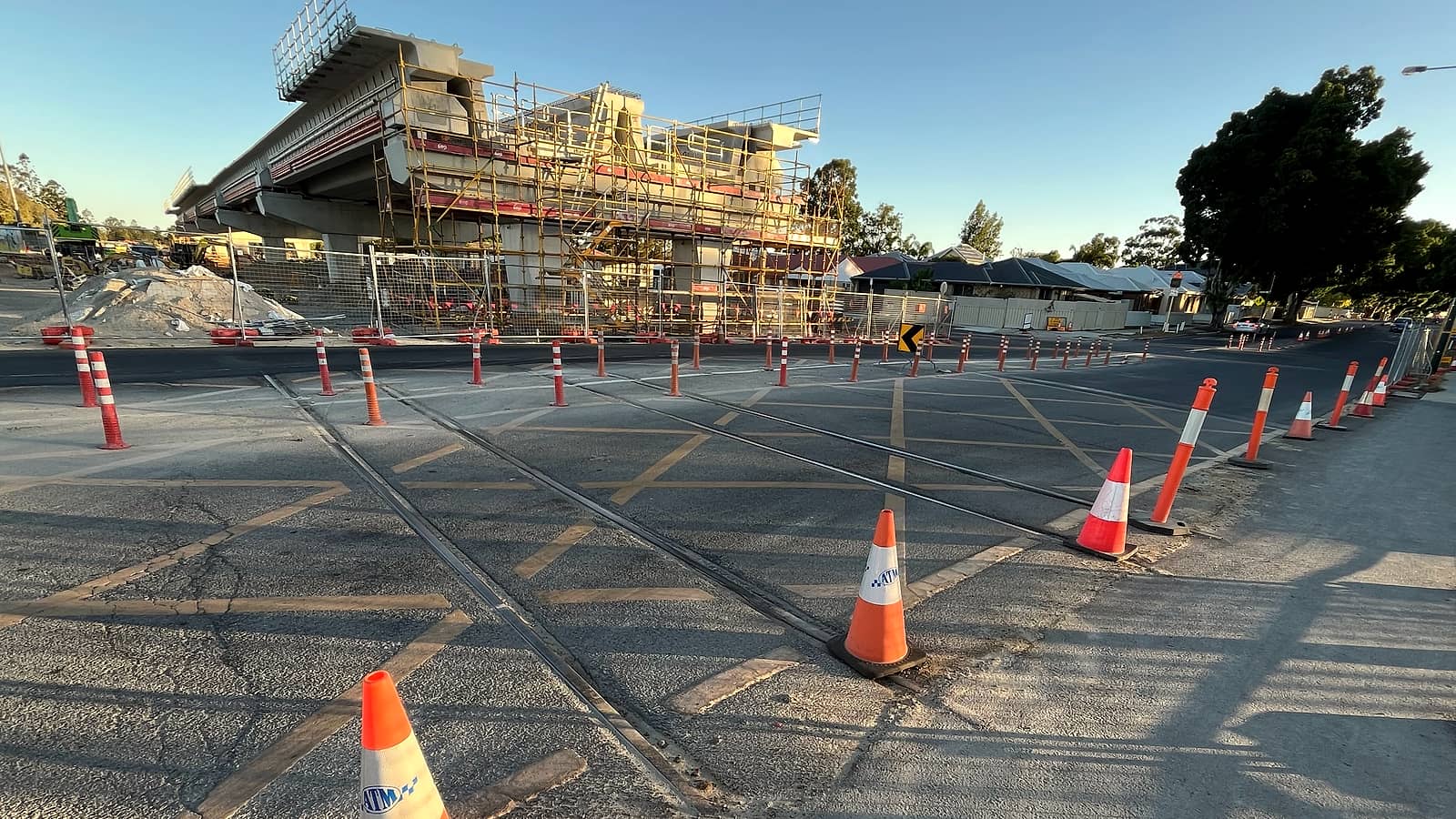
The rule in short
In most states a public grade crossing may not be opened, altered or closed without an order from the state regulatory commission or transportation department. A city, county, railroad or the agency itself may petition. The commission holds a hearing, weighs public safety and convenience against the availability of alternate routes, and apportions the cost of the work among the railroad and the road authorities. Federal-aid funds may pay incentive amounts for closures.
Every crossing is a place where two transportation systems occupy the same ground, and the cheapest way to make one safe is to remove it. Closure is also the least popular option available, because a crossing that carries three hundred vehicles a day carries them somewhere they want to go. State law resolves that conflict by giving the decision to a regulatory body rather than to either party.
Where the authority sits
In many states a single commission holds exclusive power over crossings. A representative statute provides that no public road may be constructed across a railroad track at grade, and no track across a public road at grade, without first securing the commission's permission. A companion provision gives the commission exclusive power to determine and prescribe the manner and terms of installation, operation, maintenance, use and protection of each crossing, to alter or relocate a crossing, to abolish one by physical closing, and to require a separation of grades.
Other states place the power in the transportation department, and a few leave it with the local road authority subject to state review. The distinction matters mainly for where the petition is filed and what appellate route exists afterwards. The substance of the inquiry is similar everywhere.
Filing the petition
Standing is broad. A typical statute allows the governing body of a city or town, the legislative authority of a county, or the railroad whose line is crossed to petition the commission, alleging that public safety requires a separation, an alteration in the method and manner of an existing crossing and its approaches, or a change in the style and nature of the construction.
Adjoining owners generally cannot file, but they are entitled to notice and to appear. A neighborhood that wants a crossing closed for safety or noise reasons therefore works through its city or county, which has to be persuaded to sponsor the petition before anything else happens.
Closure petitions usually arrive from one of two directions. A road authority pursuing a corridor safety plan proposes consolidating several lightly used crossings onto one improved crossing. Or a railroad pursuing maintenance savings proposes closing a crossing it considers redundant. Either way the petition has to describe the crossing, the traffic it carries, the alternate routes available and the effect on emergency response.
A community seeking to silence horns must bring every public crossing in the corridor up to a standard that includes flashing lights and gates. Closing a marginal crossing is often cheaper than equipping it, and it also removes that crossing from the risk calculation. Many quiet zone applications are therefore closure petitions with a different stated purpose, and running the two processes together saves a full round of engineering. The horn side of that work is set out in the article on quiet zones and the horn requirement.
| Outcome sought | Who usually files | Principal objection raised | Typical cost split |
|---|---|---|---|
| Permanent closure | Road authority or railroad | Emergency response time and detour length | Road authority barricades, railroad removes surface |
| Consolidation onto an improved crossing | Road authority | Access for a specific neighborhood or business | Federal-aid funds with a local match |
| Grade separation | Road authority with a local sponsor | Cost and right of way acquisition | Apportioned by the commission |
| Upgrade of the warning device | Road authority | Ranking against other crossings | Federal-aid crossing funds |
| Closure of a private crossing | Railroad | Loss of access to a landlocked parcel | Governed by the crossing agreement |
Private crossings follow the agreement, not the commission
A private crossing exists to serve a farm, an industry or a handful of properties, and it is created by an agreement, an easement or a deed reservation rather than by a public order. Closing one is generally a contract question. The agreement will say whether the railroad may terminate, on what notice, and who pays to remove the surface.
The limit on that power is access. Where the crossing is the only means of reaching a parcel from a public road, the landowner is likely to hold an easement of necessity or a similar right, and a railroad cannot extinguish it by terminating a license. Disputes of this kind are resolved in state court on property principles rather than by the commission.
Upgrades to a private crossing follow the same logic. Because federal-aid crossing money is aimed primarily at public crossings, the landowner or the industry served usually pays for gates, lights or a better surface, and the terms are negotiated into a revised crossing agreement. That is one reason private crossings remain the least protected category on most systems.
The hearing and what persuades it
The proceeding is administrative. Notice goes to the railroad, the road authorities, and in most states to owners of property whose access is affected. A hearing follows, at which the commission takes evidence on traffic volumes, train counts, sight distance, crash history, the condition of the crossing surface and approaches, the length and quality of the detour, and the effect on emergency vehicles, school buses and agricultural equipment.
Opposition succeeds most often on emergency access. A fire district showing that closure adds several minutes to a response for a defined area is the strongest available argument, and commissions frequently condition approval on an alternate route or a new connection rather than denying outright. Arguments based on convenience alone rarely prevail.
The commission may also apportion cost. Where a separation of grades is ordered, the statute typically empowers the commission to prescribe the proportions in which the expense of construction, alteration, relocation or abolition is borne. That apportionment is often the most contested part of the case, because it decides who pays for a structure that will outlast everyone involved.
What has to happen after the order issues
An order is not self-executing. The road authority installs barricades and advance signing and, where required, a turnaround. The railroad removes the crossing surface and any warning devices. Utilities in the crossing are addressed under their own agreements. Where the closure was a condition of a quiet zone, the certification cannot be issued until the physical work is complete.
The record then has to be updated. The national crossing inventory carries a status for every crossing, and a closed crossing that remains listed as open continues to appear in safety rankings and to distort the ranking of neighboring crossings, a problem described in the article on how warning devices are selected and funded.
Closure also changes the legal picture on the ground. Once a crossing is removed, the point becomes ordinary right of way, and a person walking there is subject to the narrow duty described in the article on the duty owed to a trespasser rather than to crossing duties. If the line itself is later abandoned, the corridor questions in the article on railroad rights of way take over.
Points to carry away
- Opening, altering or closing a public crossing typically requires an order from the state commission.
- A city, county, road authority or railroad may file the petition, and adjoining owners receive notice.
- The commission may order separation of grades and may apportion the cost among the parties.
- Emergency access, school routes and detour length are the usual grounds for opposing a closure.
- Federal-aid crossing funds may include incentive payments for eliminating a crossing.
Questions readers ask
Can a railroad close a crossing on its own?
Not a public one. Public crossings exist under an order or a franchise, and in most states removing one requires an order from the commission or the department that authorized it. A railroad can install additional protection, repair the surface and control vegetation without permission, but barricading a public road is a different act. Private crossings are governed by the crossing agreement instead, and a railroad often can terminate one on the terms of that agreement, subject to any easement of necessity the landowner holds.
What happens to the road once the crossing closes?
The road authority normally barricades the approaches, installs advance signing for the new terminus, and where necessary builds a turnaround. The right of way itself typically remains public unless the local government vacates it by a separate process. Utilities occupying the crossing often stay in place, since a closure to vehicles does not by itself terminate a utility crossing agreement. The crossing record is then updated in the national inventory so it stops appearing in safety rankings and funding calculations.
Do adjoining owners get compensated?
Usually not for the inconvenience of a longer route, because a change in traffic patterns is generally treated as damage shared with the public rather than a taking. The exception is loss of access. Where a closure leaves a parcel with no reasonable means of reaching a public road, the owner has a claim for the taking of access, and the remedy is often a required alternate access road built as a condition of the closure order rather than a payment.
Sources
- California Public Utilities Code § 1202 — Exclusive power over crossingsCommission power to prescribe, alter, relocate or abolish a crossing and to apportion the cost.
- California Public Utilities Code § 1201 — Permission required for a crossingNo road may be built across a track, and no track across a road, without commission permission.
- RCW 81.53.060 — Petition for alteration of crossingWho may petition a state commission to alter, separate or close a crossing.
- 23 U.S.C. § 130 — Railway-highway crossingsFederal-aid funding for crossing hazard elimination, including provisions for closure incentives.
- 23 CFR Part 924 — Highway Safety Improvement ProgramThe state process for identifying and programming crossing safety projects, including consolidation.
- 49 U.S.C. § 20160 — National crossing inventoryThe inventory record that must be updated when a crossing is closed.
- 49 CFR § 234.409 — Submission of periodic updates to the Crossing InventoryThe reporting duty that keeps crossing status current after a change.
Metro Law Advisors is a publication, not a law firm. This article states general rules and cites its sources; it is not advice about any particular case, and the law differs by state and changes over time.
More in Rail & Transit

Railroad Rights of Way and What Happens When Service Ends
Rail corridors were assembled by purchase, condemnation and federal land grant, so the interests range from full ownership to a limited easement. When a railroad seeks to abandon a line, the Surface Transportation Board decides whether to authorize it. Before abandonment takes effect, a trail sponsor may seek interim trail use under the National Trails System Act, which railbanks the corridor: the easement does not terminate and reversion does not occur.
Trespassers on the Track and the Duty a Railroad Owes
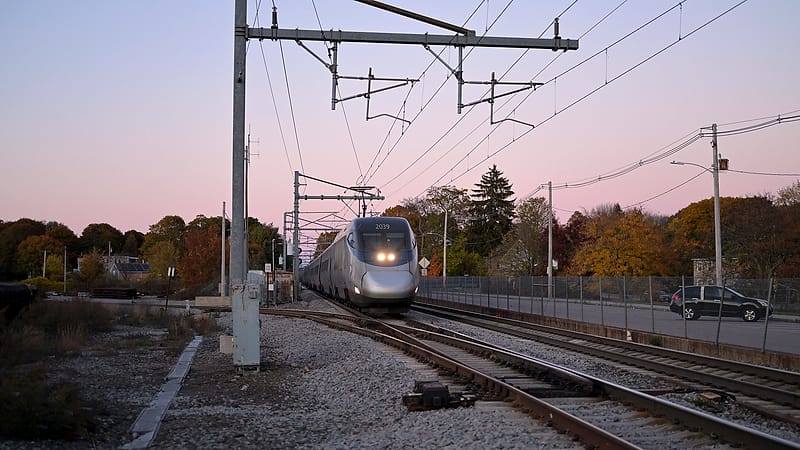
Most states owe a trespasser only a duty to refrain from willful or wanton injury, which means a railroad is generally not liable for failing to anticipate someone on the track. The duty rises where the railroad knows people are regularly present at a location, where a crew discovers a person in peril and can still act, and in some states where a child is attracted to dangerous equipment. State statutes separately criminalize presence on the right of way and define its width.
Fare Enforcement, Citations and the Hearing That Follows
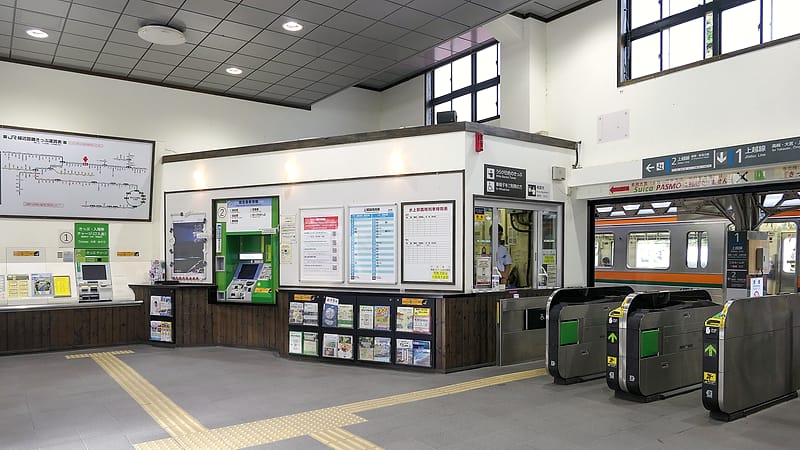
Fare evasion was traditionally a criminal infraction. Many states now let a transit agency adopt an ordinance imposing an administrative penalty instead, enforced by designated inspectors on a proof-of-payment basis. The notice of violation sets a short period to pay or to request review, followed by an administrative hearing and, in most systems, a limited right of appeal to a court. Ignoring the notice usually escalates the amount and can send the debt to collection.