Grade Crossing Warning Devices and Who Decides What Is Installed
A crossbuck at one crossing and gates at the next is rarely an accident of history. The device is chosen by a state highway agency working through a federal-aid program, and the paperwork behind that choice often decides who can be blamed after a collision.
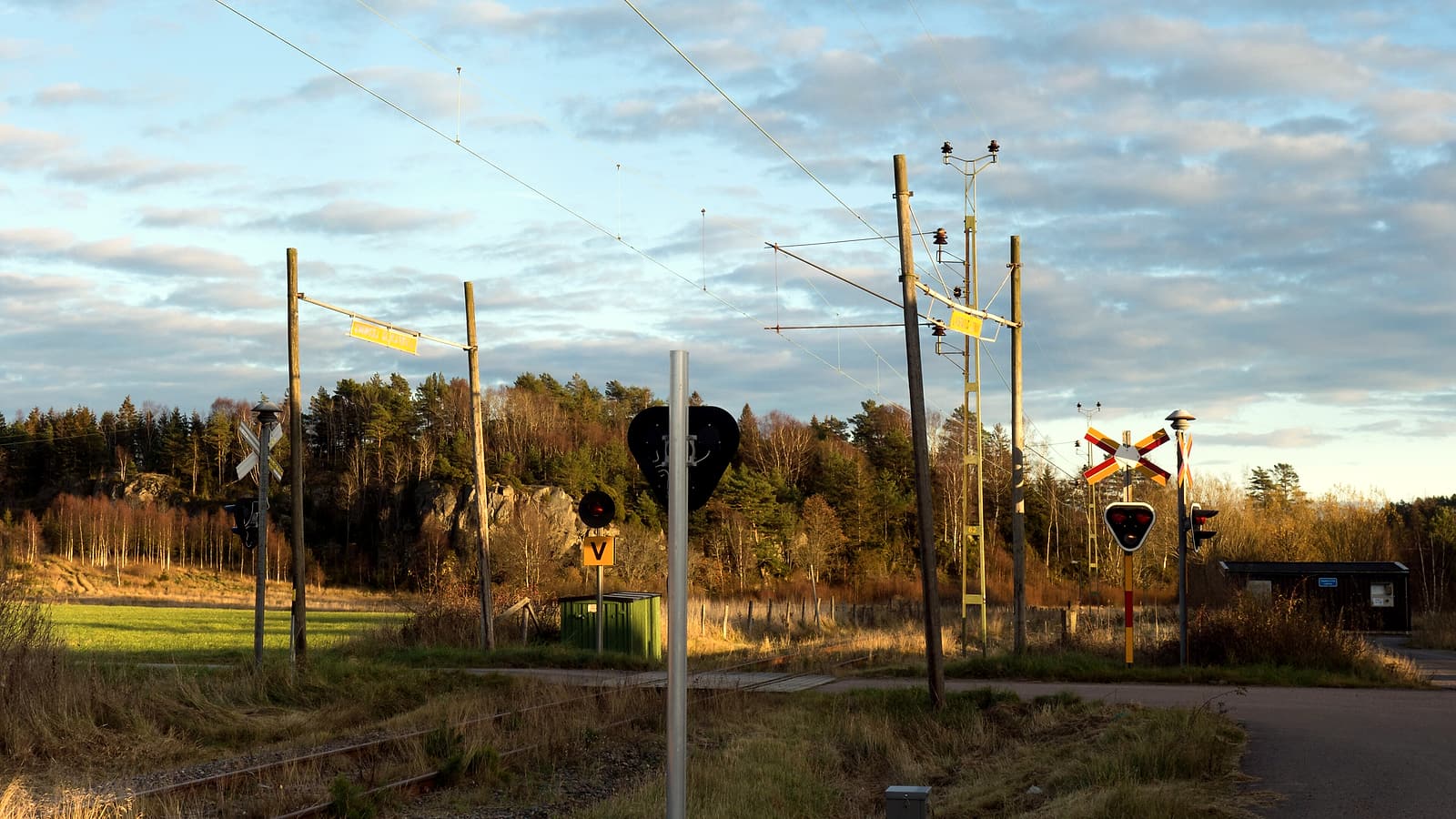
The rule in short
Warning devices at public crossings are selected by the state highway agency, not the railroad. Federal-aid money flows through the railway-highway crossings program, and federal design rules identify the conditions under which automatic gates and flashing lights are required for a funded project. Once a device is federally approved and installed with federal money, its adequacy is generally settled as a matter of federal law.
Drivers assume the railroad decides what protects a crossing. It does not. At a public crossing the decision belongs to the state highway agency, which owns the road, and the money usually comes from a federal-aid program with its own eligibility rules. The railroad builds and maintains the equipment, but it is executing a decision made elsewhere.
The program that pays for the device
Federal law sets aside funds for the elimination of hazards at railway-highway crossings. Each state must conduct a survey of its public crossings, identify those needing separation, relocation or protective devices, and establish an implementation schedule. The schedule is a ranked list, and a crossing that is not on it will not be upgraded no matter how uncomfortable it feels.
Because most of the cost is federal, the federal design rules attach. Those rules identify the circumstances in which automatic gates with flashing light signals are required for a project: multiple main lines, multiple tracks, high speed with substantial traffic volumes, passenger operations, and other conditions where a diagnostic team finds gates are appropriate. Where none of the listed conditions is present, a lesser device can be approved.
How a crossing reaches the list
States rank crossings through the highway safety improvement process, which requires a data-driven method rather than a wish list. The inputs are the national crossing inventory record, average daily traffic, train counts and speeds, the number and type of tracks, sight distance, roadway approach geometry and crash history.
The inventory record matters more than its dull name suggests. Railroads must report crossing data and keep it current on a fixed cycle, and a stale record can leave a crossing scored as a low-volume rural site when the surrounding area has been built out. Where a crossing has been missed for years, the first useful step is often a correction to the inventory rather than a demand for gates.
A diagnostic team review is the usual next stage. The team walks the crossing, measures approach sight distance in each quadrant, and recommends a treatment. Its report is a public record in most states and is the single most useful document to request when asking why a crossing was left as it is.
Ranking is comparative, which is the part communities find hardest to accept. A crossing can be genuinely dangerous and still sit below others in the same district because the scoring method weights exposure, meaning the product of vehicles and trains. A quiet residential crossing with poor sight lines and four trains a day will lose to an arterial with sixty. Changing the outcome usually means changing an input the ranking actually uses.
Crossbucks, advance warning signs and pavement markings are passive devices; they tell a driver a crossing exists but give no information about an approaching train. Flashing lights and gates are active devices tied to train detection circuits. The maintenance, inspection and malfunction-reporting rules in the federal grade crossing regulations apply to active systems. A complaint that a passive crossing was inadequate is a design claim, not a maintenance claim, and the two are litigated very differently.
| Treatment | Who selects it | Typical funding route | Ongoing duty |
|---|---|---|---|
| Crossbucks and advance warning signs | State or local road authority | Ordinary highway maintenance | Road authority keeps signs visible |
| Flashing lights | State highway agency after diagnostic review | Federal-aid crossing funds | Railroad inspects, tests and maintains |
| Gates with flashing lights | State highway agency, required in listed conditions | Federal-aid crossing funds | Railroad inspects, tests and maintains |
| Grade separation | State highway agency with local sponsor | Federal-aid plus state and local match | Road authority owns the structure |
| Closure and consolidation | State regulatory commission or highway agency | Incentive payments to the road authority | Crossing removed from the inventory |
What the railroad actually controls
The railroad's role begins after the device is chosen. It designs the train detection circuits, builds the signal system, and thereafter inspects, tests and maintains it under the federal grade crossing rules. Those rules set intervals for testing the warning time, the gate mechanism, the ground circuits and the standby power, and they require records of each test.
The railroad also controls the crossing surface between the rails and for a short distance on either side, along with vegetation on its right of way. Sight distance across the approach quadrants is a shared responsibility: the railroad clears its own property, the road authority clears the roadway right of way, and a private landowner may control a corner neither of them can touch.
Cost sharing follows the same division. Federal-aid crossing projects generally do not require a railroad contribution beyond the value it receives, on the theory that the improvement primarily serves the traveling public. Maintenance of the installed system, by contrast, is usually the railroad's continuing expense, which is one reason railroads support crossing closures where traffic can be consolidated.
Why the selection record decides later cases
When federal funds participate in a crossing improvement and the federal highway authority approves the device, the adequacy of that device is generally treated as settled for purposes of a later state law claim. A plaintiff who argues that gates should have been installed at a federally funded flashing-light crossing is usually met with that record, and the theory does not survive. The mechanics of that displacement are set out in the article on how federal rules displace a state safety claim.
What survives is everything the approval did not decide. Whether the installed system was inspected and tested on schedule, whether vegetation blocked the sight line, whether the railroad responded properly to a reported malfunction, and whether the crew sounded the horn are separate questions with their own answers. Those theories are the practical core of most cases, as the article on liability after a crossing collision describes.
The documents that answer the question
Three records explain almost any crossing. The inventory record shows what the government believes exists there. The diagnostic review or project file shows what was considered and approved, and by whom. The railroad's inspection and test records for the signal system show whether the equipment was working as required.
State rail safety offices hold the first two and will usually produce them on a public records request. The third comes from the railroad and normally requires litigation or a formal request. A community pressing for an upgrade should also ask whether the crossing has been studied for closure, because consolidating traffic onto a protected crossing is often funded faster than adding gates, a route explained in the article on closing or consolidating a crossing.
Finally, the horn is a separate system from the lights and gates. It sounds by federal rule unless the community has gone through the process described in the article on quiet zones and the horn requirement, and the presence of gates is often what makes that process possible in the first place.
Points to carry away
- The state highway agency, not the railroad, selects the warning device at a public crossing.
- Federal-aid crossing funds are set aside by statute and administered as part of the highway safety improvement program.
- Federal design rules list the conditions under which gates and flashing lights are required for a funded project.
- Federal approval and installation of a device generally settles the adequacy question in later litigation.
- Railroads must keep the national crossing inventory current for each crossing they operate over.
Questions readers ask
Can a homeowner ask for gates at a nearby crossing?
A request goes to the state highway agency or the state rail safety office rather than to the railroad, because those agencies rank crossings and program the money. Local governments can also nominate a crossing through the metropolitan planning process. The ranking is driven by traffic counts, train counts, sight distance, crash history and roadway geometry. A single request rarely moves a crossing up the list on its own, but a documented near-miss history and a school or hospital route argument carry more weight than a general complaint about noise or delay.
Why do private crossings have almost no protection?
A private crossing serves a farm, a plant or a small number of properties, and it exists under an agreement or an easement rather than as a public road. Federal-aid crossing funds are aimed primarily at public crossings, so the private crossing is usually left with signs and whatever the crossing agreement requires. The duty to keep the approach clear and to look before crossing sits largely with the property owner. Upgrades are typically negotiated with the railroad and paid for by the landowner or the industry served.
Does a malfunctioning signal excuse a driver who proceeds?
Not automatically. Federal rules require a railroad to respond to a reported malfunction with specific interim protections, and a failure to do so is a strong claim. A driver still owes the ordinary duty to look and listen before entering, and most states treat entering the track without looking as negligence regardless of what the signal was doing. The practical effect is comparative fault: the malfunction supplies the railroad's share, the failure to look supplies the driver's, and the jury divides the loss.
Sources
- 23 U.S.C. § 130 — Railway-highway crossingsThe federal-aid program that funds elimination of hazards and installation of protective devices at crossings.
- 23 CFR § 646.214 — DesignThe conditions under which automatic gates with flashing lights are required for a federally funded crossing project.
- 23 CFR Part 924 — Highway Safety Improvement ProgramThe planning, implementation and evaluation process states use to rank and program safety projects.
- 49 U.S.C. § 20160 — National crossing inventoryThe duty to report and periodically update crossing data for every crossing a railroad operates over.
- 49 CFR § 234.409 — Submission of periodic updates to the Crossing InventoryThe reporting cycle that keeps the inventory record for each crossing current.
- 49 CFR Part 234 — Grade Crossing SafetyMaintenance, inspection and testing standards for the warning systems once installed.
Metro Law Advisors is a publication, not a law firm. This article states general rules and cites its sources; it is not advice about any particular case, and the law differs by state and changes over time.
More in Rail & Transit
Railroad Rights of Way and What Happens When Service Ends
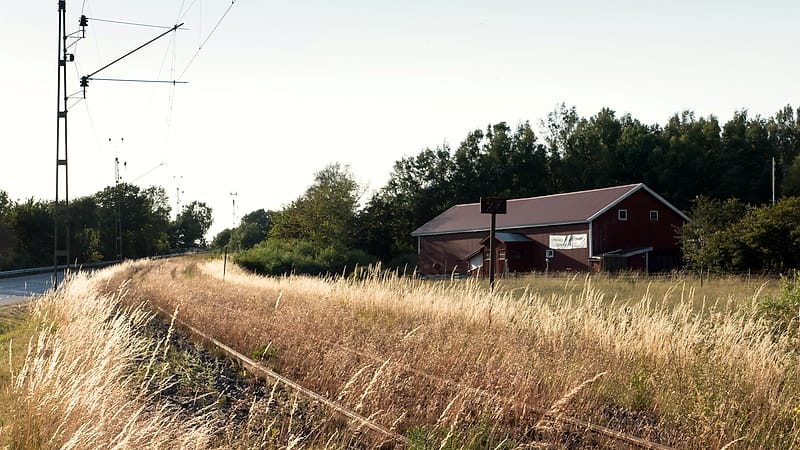
Rail corridors were assembled by purchase, condemnation and federal land grant, so the interests range from full ownership to a limited easement. When a railroad seeks to abandon a line, the Surface Transportation Board decides whether to authorize it. Before abandonment takes effect, a trail sponsor may seek interim trail use under the National Trails System Act, which railbanks the corridor: the easement does not terminate and reversion does not occur.
Trespassers on the Track and the Duty a Railroad Owes
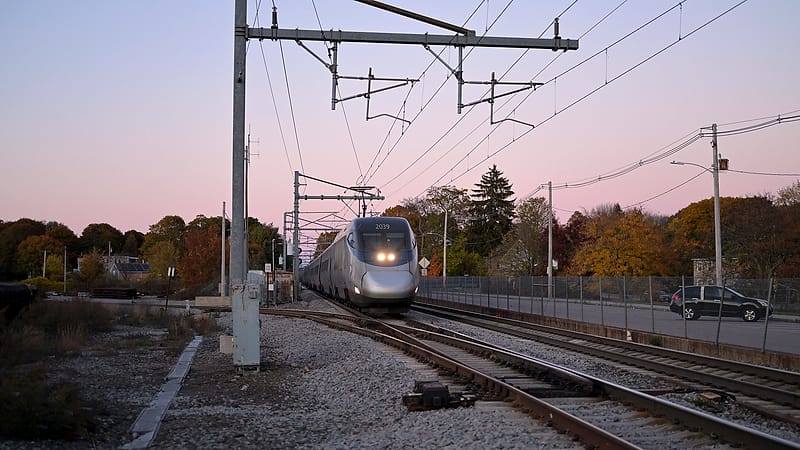
Most states owe a trespasser only a duty to refrain from willful or wanton injury, which means a railroad is generally not liable for failing to anticipate someone on the track. The duty rises where the railroad knows people are regularly present at a location, where a crew discovers a person in peril and can still act, and in some states where a child is attracted to dangerous equipment. State statutes separately criminalize presence on the right of way and define its width.
Fare Enforcement, Citations and the Hearing That Follows
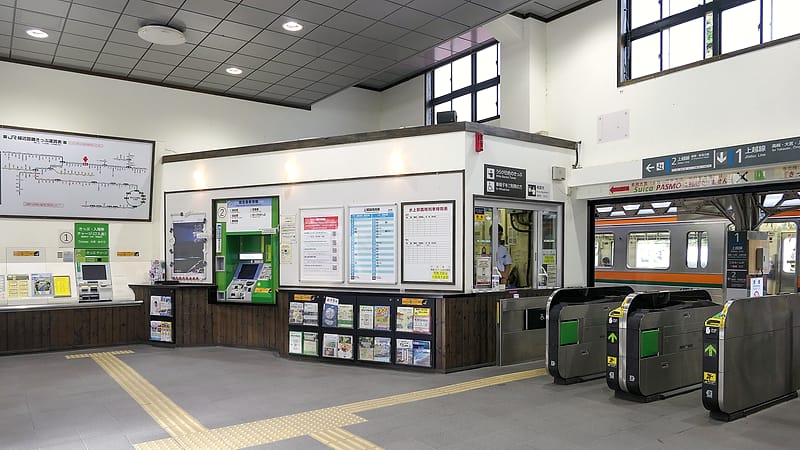
Fare evasion was traditionally a criminal infraction. Many states now let a transit agency adopt an ordinance imposing an administrative penalty instead, enforced by designated inspectors on a proof-of-payment basis. The notice of violation sets a short period to pay or to request review, followed by an administrative hearing and, in most systems, a limited right of appeal to a court. Ignoring the notice usually escalates the amount and can send the debt to collection.